
Insights / Case Studies Premium
POTENTIAL OF FISH SCALES IN INDUSTRIAL USE IN CIRCULAR ECONOMY PARADIGMS: WASTE TO WEALTH FROM AQUATIC FOOD SYSTEM

Fish are an important component of aquatic food systems, providing billions of people throughout the world access to nutritious and reasonably priced food. They greatly contribute to the world's food and nutritional security since they are abundant in high-quality protein, vital fatty acids, vitamins, and minerals. Through production, trade, processing, and other businesses, fisheries and aquaculture sustain the livelihoods of hundreds of millions of people and significantly contribute to national economies and the global GDP. Additionally, fish production is thought to be a reasonably sustainable source of animal protein, contributing to the expansion of the world's food supply (Coppola et al., 2021). Fish scales are often discarded, despite their potential in material science and biomedical research.
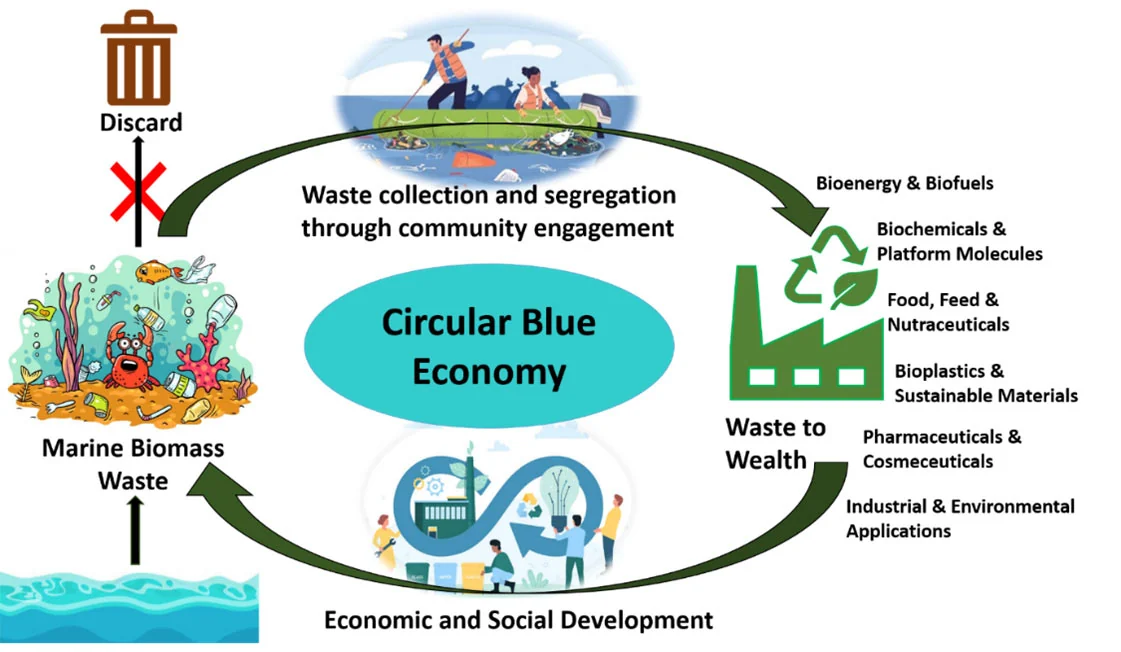
A circular economy can transform fish scales into high value products like collagen, bioplastics, and fertilizers, thereby reducing waste and promoting susta inabl e resource use (Manjudevi et al., 2024). Fish scales contain collagen which are valuable in dentistry and bone grafting, and offer advantages in drug delivery, wound healing, and tissue engineering, being more sustainable and culturally acceptable than traditional sources.
They can also be integrated into bio-sensors for environmental monitoring (Boronat et al., 2023). Collaboration between governments, academic institutions, and industry players is crucial for fully utilizing fish scales. The fish scales are classified into four types: placoid (tooth-like, made of dentin and enamel), ganoid (thick, diamond-shaped, coated with ganoine), cycloid (smooth edges, overlapping for enhanced mobility), and ctenoid (with comb like projections for better hydrodynamics) (Fig. 1). A shift in mindset to view fishing leftovers as valuable resources can reduce ecological impact, create new business opportunities, and promote a sustainable global food system.
Paid article
Continue reading with a Magazine membership
You have read the opening of this article. Magazine membership unlocks the full text of every paid article, all paid magazine editions, and saving your reading list.
TopicsDesalinationGroundwater & Water ResourcesIndustrial WaterIndustryPolicy & GovernanceWater Treatment
What did you think of this article?
Sign in or create a free account to react and join the discussion.
Comments
Join the discussion. Free members can comment and react.
No comments yet. Be the first to share a thought.