
No Margin of Error: Corrosion Prevention for Mission Critical Data Centers

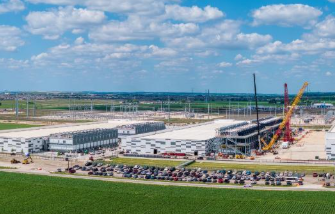
Today’s world depends on data centers to keep life going. From hospitals and businesses to educational organizations and transportation systems, every sector of modern society is tied to electronics in one form or another. The AI boom will only add to the demand, making data centers more mission critical than ever. With a one-month construction delay easily adding up to a $14.2 million loss and a typical two-plus hour unplanned operational outage costing $946,788 per incident on average, data centers have no room for error—either for the sake of their customers or their own balance sheet. Corrosion prevention is therefore an extremely valuable investment with a potentially significant return at every stage from fabrication to operation.
Exploring the Hyperscale Data Center Protection Life Cycle
Scott Bryan, Certified Water Technologist and Cortec® Director of Business Development - Water Treatment, has identified at least eight main areas where corrosion protection on data center equipment infrastructure should be addressed:
Factory Fabrication and Testing
Preparation for Transit
Onsite Laydown and Storage
Post-Installation Standby (12-18 months)
Protection of Control Panels, Junction Boxes, and Switchgears
Final Clean and Flush Before Commissioning
Test Cycles at Commissioning
Operation and Layup of Spares
The actions of one player at any stage of the data center life cycle can seriously affect subsequent phases and project overseers. For example, Bryan explained that when corrosion happens under the watch of a fabricator or construction manager in phases 1, 2, or 3, it can turn into a problem for the project manager or commissioning team in stages 6, 7, and 8. He noted, that “while it may not lead to a failure of equipment, it will lead to delays and unplanned cleaning/flushing requirements that could have been avoided, and that represents a significant increase in costs and delays.” This makes it critical for all players to cover their phase of corrosion prevention adequately to avoid downstream problems and upstream blame.
Targeting Data Center Cooling System Corrosion
One of the best guidelines for protecting data center equipment is to include a corrosion inhibitor wherever water is added. Standard processes such as hydrotesting or fill and flush activities can leave chillers, piping, pumps, heat exchangers, and even thermal energy storage tanks exposed to residual moisture and vulnerable to flash corrosion within a few hours of testing. Rather than using plain water and facing the consequences of rework and component installation delays, fabricators, OEMs, and contractors can do themselves a favor by adding a corrosion inhibitor such as VpCI®-649 to the cleaning and test water for efficient, effective protection that lasts into the next stage of storage or transit. Operators should also continue the standard practice of including corrosion inhibitors in their water treatment chemistry “package” and keeping corrosion inhibitors (e.g., VpCI®-649 or Cooling Tower Frog®) on hand for planned shutdowns and seasonal layup.
Corrosion Protection for Idle Critical Infrastructure
Countless other components stand to benefit from anticorrosion packaging and various forms of void space protection whenever transit or a delay leaves idle equipment at risk. For example, large transformers, switchgears, piping, and chillers need protection when being shipped to and stored for extended periods outdoors at data center construction sites. In these cases, VpCI®-126 HP UV Shrink Film is an excellent option, both to form an external barrier to the elements and to deliver Vapor phase Corrosion Inhibitors and contact inhibitors to the metal surfaces within the package. These corrosion inhibitors are attracted to metal, where they form a protective molecular layer that inhibits corrosion reactions. Delivery systems such as the VpCI® Dragon™ are ideal for fogging and protecting the inside of chillers and other vessels, while VpCI®-111 Emitters are easy to stick inside electrical/electronic cabinets for protection of miscellaneous wires and metal contacts.
Examples of Corrosion Control for Data Center Equipment
In Indonesia, a data center construction delay left 40 critical coolant distribution units in need of 12 months of corrosion protection in a storage environment lacking climate control. Key requirements included ease of application and removal, no negative impact on electricals and other components, and accommodation for inspection every 30 days. Following much discussion with Cortec® and local support personnel, VpCI®-308 Pouches were chosen for internal protection and VpCI®-126 Film for external protection. After two inspection cycles, the client was pleased with this method of preventing high-cost unit failures from corrosion and shared it with their manufacturing site for protection of new units awaiting shipment in India.1
In the USA, a major chiller manufacturer now fogs internal chiller tubing with the VpCI® Dragon™ and wraps the massive equipment in a customized color of VpCI®-126 HP UV Shrink Film before shipping the chillers by flatbed freight. The company has used this external packaging method for approximately two decades, adding internal protection in the last five years and increasing their use of protective products as chiller orders have risen with the data center boom. These materials streamline the shipping and receiving process by allowing for easy identification and removal in addition to corrosion protection.2
Investing in Mission Critical Infrastructure Protection
These are just a few examples of how corrosion protection can be effectively applied to components in one or two stages of the data center life cycle. However, preventative maintenance is needed at every turn to ensure healthy data center operations with as few service interruptions as possible. For those that understand the seriousness of the risks, corrosion protection is a critical part of preventative maintenance that offers a significant return on a small investment simply by avoiding the serious complications of a little corrosion
What did you think of this article?
Sign in or create a free account to react and join the discussion.
Comments
Join the discussion. Free members can comment and react.
No comments yet. Be the first to share a thought.