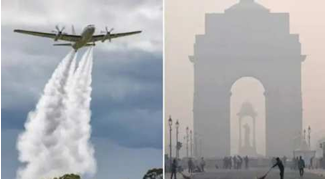

Delhi has conducted its first cloud-seeding trial, using aircraft to disperse silver iodide and sodium chloride over areas such as Burari and Karol Bagh. The initiative, led by the Delhi government in collaboration with IIT Kanpur, seeks to trigger artificial rainfall to wash out particulate pollution. This trial reflects a significant shift in Delhi’s environmental strategy; from reactive pollution control to proactive, technology-driven interventions. While cloud seeding has been used in other parts of the world, its application here underscores how water-industry thinking must increasingly overlap with meteorology and atmospheric…
Read MoreDay: February 11, 2026
Union Budget 2026: A Turning Point for India’s Water & Sustainability Ecosystem
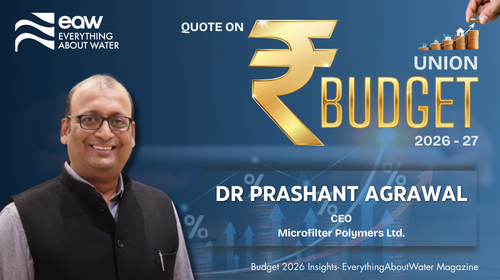
Dr Prashant Agrawal, CEO,Microfilter Polymers Ltd. India When I look at the Union Budget 2026, I don’t just see numbers or allocations, I see intent. An intent to build a more resilient, sustainable and infrastructure-ready India. For those of us working in the water and environmental solutions sector, this budget quietly but clearly signals a decade of opportunity. Water security is no longer a social issue alone; it has become an economic imperative. As cities expand, industries scale and climate variability increase, every litre of water must be treated, reused…
Read MoreNEP Accelerated: Budget 2026’s Roadmap to a Knowledge Economy
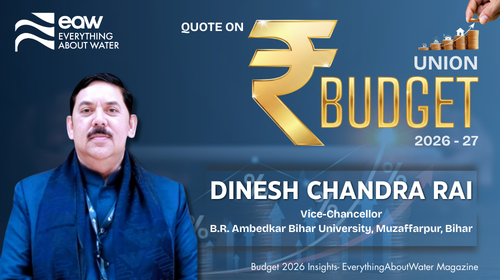
Prof. Dinesh Chandra Rai, Vice-Chancellor, B.R. Ambedkar Bihar University, Muzaffarpur, Bihar The Union Budget 2026-27 goes beyond just listing funds; it pushes forward the goals of the National Education Policy (NEP) 2020. With ₹1.39 lakh crore set aside for education, it boosts India’s aim to build a knowledge-driven economy. The focus is on making education easier to access, along with promoting new ideas, research, and skills. If carried out well on the ground, reaching 50% enrollment in higher education by 2035 will be straightforward. The ₹55,727 crore for higher education…
Read More