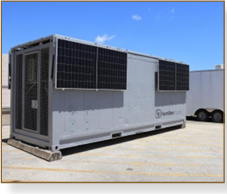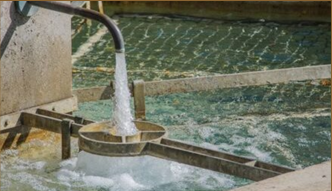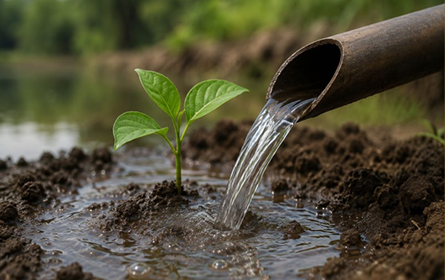

NASA has begun testing a mobile wastewater treatment facility designed to support long-term human habitation on the Moon and Mars. The system, developed at the Kennedy Space Center in Florida, has been transferred to the University of North Dakota, where it will be evaluated in a habitat that simulates the conditions of future extraterrestrial missions. The Divergent Deployable Wastewater Treatment Facility is intended to transform wastewater generated by crew members into reusable resources, helping reduce dependence on supplies transported from Earth. At the University of North Dakota, the technology has…
Read MoreAuthor: eawater
How to Secure Your Water Future as Concerns Escalate
The reliance of city residents on water tankers has increased alarmingly in recent years due to poor water supply infrastructure, unchecked concretisation and loss of green cover. With expanding civic boundaries and rapidly increasing population, the quantum of water supplied to cities has been falling short. Experts recommend that residential & commercial complexes invest in rainwater harvesting (RWH) systems. Lunkad Greenland-2 in Vimannagar was one of the first societies to install RWH in 2003. The society needed three tankers daily at Rs. 25,000 per month before installation. After spending Rs.…
Read MoreWater Positive India Forum 2026 Calls for a New Approach to India’s Water Future
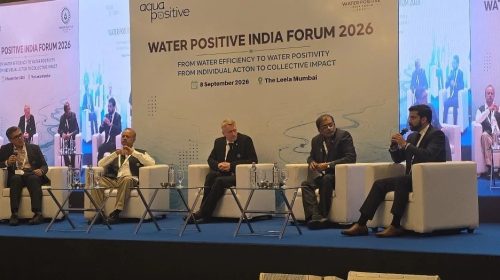
Mumbai, 8 September 2026 India’s water challenge is no longer a problem that can be left to the environmental agenda alone. It is becoming a question of economic growth, business continuity, industrial resilience, community well-being and India’s ability to achieve its long-term development ambitions. That was the strong message emerging from the Water Positive India Forum 2026, held on 8 September at The Leela, Mumbai. Convened by Aqua Positive in partnership with Murugappa Water Technology and Solutions Pvt. Ltd. (MWTS), the Forum brought together leaders from industry, government, technology, finance, water…
Read MoreUNICEF report: floods, droughts and heat are putting over a billion children at risk
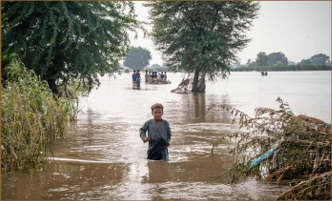
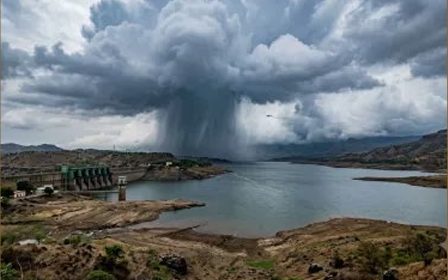
More than one billion children are now exposed to at least three simultaneous climate hazards, according to the Children’s Climate Risk Report 2026. Drawing on a newly developed Global Child Hazard Database, the report maps children’s exposure to eight climate hazards—riverine floods, droughts, tropical storms, heatwaves, extreme heat, fires and sand and dust storms—alongside malaria and ambient air pollution. Exposure is widespread: 1.8 billion children live in drought-affected areas, 1.5 billion face heatwaves, 1.2 billion experience temperatures exceeding 35°C, 662 million live in tropical storm zones, and 2.3 billion live…
Read MoreMore than half of data centers face drought or flood risk, report finds
The ten highest-risk markets include Northern Virginia, the Carolinas, Atlanta, Johor, Singapore, Batam, Marseille, Bangkok, Beijing, and New York/Northern Jersey. Lowest-risk markets cluster in northern Europe (Stockholm, London, Copenhagen, Amsterdam, Oslo, Dublin) plus Toronto, San Francisco, Montreal/Quebec & Bogota. The industry is concentrating capacity in demanding locations rather than favorable ones. 30–50 percent of 2026 projects face delay as established hubs hit power, land & permitting constraints. The central argument: climate risk is underpriced. Markets with comparable power costs and demand are underwritten as equivalent despite materially different risk profiles,…
Read MoreA Satellite Watching Over Haryana’s Farms Is Helping the State Save Rs 300 Crore Per Year
Haryana received the Geospatial Excellence Award at the Geospatial World Forum in Amsterdam in May 2026 for a satellite-powered system that helps farmers identify water stress before they see it. The international jury praised Haryana’s Space Applications Centre (HARSAC) for building a practical, scalable system that tackles food security, environmental sustainability, and climate resilience together. At its heart, the platform brings together satellite imagery, remote sensing data, GIS dashboards, mobile apps, UAV surveys, and AI analytics in one operational layer. Through this, HARSAC provides crop monitoring and yield assessment, water…
Read MoreFROM REACTIVE TO STRATEGIC: HOW INDIAN INDUSTRIES CAN REDEFINE WATER EFFICIENCY WITH INTELLIGENT CONTROL& AUTOMATION
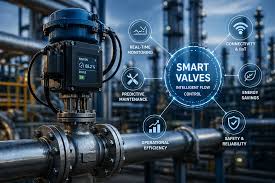
With India’s accelerating efforts to address water scarcity, industries face a clear imperative of balancing operational demands, regulatory requirements & cost pressures without compromising output. This makes intelligent automation & control technologies essential to sustainable water management. AR Madhusudan, Business Line Manager, Drive Products, ABB India With rapidly increasing population, urbanization and industrialization, the demand for water globally is outpacing the available supply. Water is indeed a critical drinking resource, but it also goes beyond to support livelihoods – it is the unseen force behind several industries like data centers,…
Read MoreMaharashtra to Shift Over 22,000 Rural Water Projects to Solar Energy
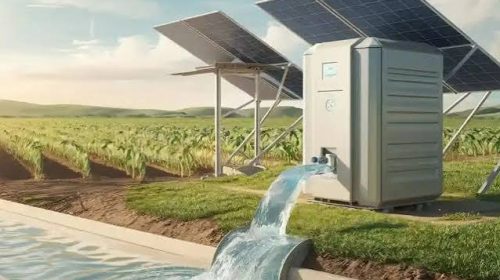
The Maharashtra government is developing a policy to solarise 22,185 rural water supply schemes as part of efforts to reduce mounting electricity dues and ensure uninterrupted drinking water services. Chief Minister Devendra Fadnavis has directed officials to formulate a dedicated policy for the phased solarisation of rural water infrastructure. The move comes amid growing concerns over mounting electricity dues associated with water supply projects. Power-related liabilities have been increasing for several schemes, creating financial and operational challenges for local authorities. Chairing a review meeting on the state’s rural drinking water…
Read MoreHow This Chhattisgarh District is Using a ‘5% Model’ to Boost Groundwater
At a time when scorching heat and water scarcity trouble several parts of Chhattisgarh, a water conservation movement in Korea district is showing promising results. Known as the “5% model”, the initiative encourages villagers to dedicate 5% of their agricultural land for soak pits that help rainwater percolate into the ground, contributing to significant improvement in groundwater levels. The model has drawn national attention. Prime Minister Narendra Modi highlighted it in his Mann Ki Baat programme in March, while Union Jal Shakti Minister C R Patil has suggested it could…
Read MoreMadhya Pradesh’s Water Conservation Model Draws Global Recognition
Madhya Pradesh’s Jal Ganga Samvardhan Abhiyan is gaining international attention as a successful water conservation model. Launched under Chief Minister Mohan Yadav, the campaign focuses on rejuvenation of rivers, ponds and traditional water bodies while promoting sustainable water management practices across the state. The recently concluded seven-day “Sadanira Samagam” at Bharat Bhavan in Bhopal highlighted integration of water conservation efforts with India’s cultural heritage. The event was attended by diplomats from Cyprus, Fiji, Mexico, Nepal, Trinidad and Tobago, and Ecuador, who praised the Madhya Pradesh model as a meaningful response…
Read More