
Europe Rewrites Its Environmental Law And Sends The Polluter The Bill 
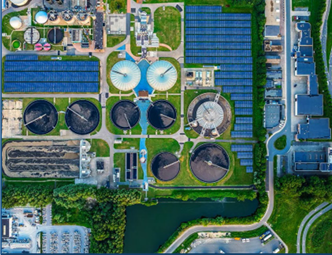
Europe has rewritten its environmental law by requiring pharmaceutical and cosmetics companies to pay for removing invisible chemicals from wastewater. The revised Urban Wastewater Treatment Directive, in force since January 2025, extends mandatory sewage treatment to smaller towns, mandates nutrient removal, sets energy-neutrality targets for 2045, and introduces quaternary treatment to remove micropollutants.  Quaternary treatment is a performance standard requiring 80% removal of indicator micropollutants. Three technologies compete: ozonation at moderate cost, activated carbon operationally simpler, and membranes capturing almost everything but expensive. Rollout is staged: 20% of large plants…

Read More

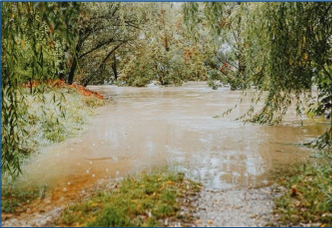
World Bank backs flood resilience project in Brazil’s Santa Catarina with US$119.2M investment

The World Bank Group has approved a US$119.2 million project to help the Brazilian state of Santa Catarina reduce flood risks and strengthen its capacity to prepare for and respond to weather-related disasters. The initiative aims to enhance climate resilience while safeguarding communities, economic activity and employment in one of the country’s most flood-prone regions.  The project is expected to benefit around 420,000 people in 54 municipalities, with a particular focus on low-income populations living in areas exposed to flooding. By improving flood protection and disaster management, the investment seeks…

Read More

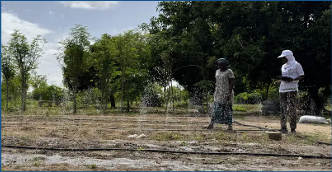
Young African Innovators are Transforming Smallholder Irrigation

A young entrepreneur in West Africa watches his solar-powered pump come to life automatically, controlled by a system that decides the right moment to irrigate based on real-time data on soil moisture, weather forecasts and solar energy supply. Born out of a clean energy agritech innovation challenge for young entrepreneurs, the system automatically switches irrigation on or off and matches water delivery to crop needs. On a one-hectare pilot farm, a 2.5 HP pump powered by 3.5 kW of solar panels delivers up to 70 cubic meters of water daily…

Read More

From floodwaters to data centre drains: water’s role in climate litigation

A landmark report on global climate litigation has identified water as an increasingly contested terrain in courtrooms worldwide. The Global Trends in Climate Change Litigation: 2026 Snapshot, published by the Grantham Research Institute & Sabin Center for Climate Change Law, records more than 3,600 climate cases filed across 62 countries since 1986, with 249 new cases in 2025 alone.  Among striking new developments are insurance subrogation cases following the April 2022 KwaZulu-Natal floods in South Africa, which killed 544 people and damaged over 4,000 homes. Japanese insurer Tokio Marine filed…

Read More

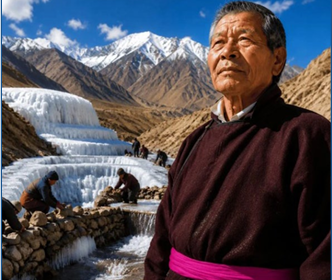
Meet Chewang Norphel the ‘Ice Man of Ladakh’ Building Artificial Glaciers to Tackle Water Scarcity

As Himalayan glaciers retreat and water scarcity threatens farming communities, engineer Chewang Norphel, popularly known as the “Ice Man of Ladakh,” pioneered artificial glaciers to help villages secure water when they need it most. His simple yet revolutionary technique proves that local innovation can offer powerful climate solutions.  For decades, Ladakh’s glaciers have been the lifeline of its people, feeding streams that irrigate crops. Rising temperatures and declining snowfall have disrupted this fragile balance, leaving farming communities struggling with severe water shortages during the crucial sowing season. Norphel’s journey began…

Read More

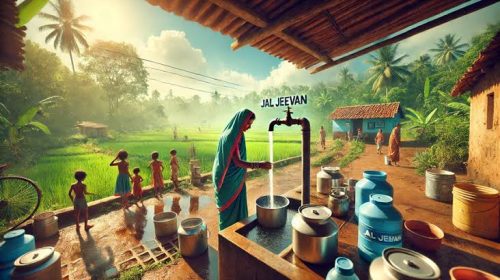
Extension of the Jal Jeevan Mission and Transfer of Rural Water Supply Schemes

To enable every rural household in the country to have assured potable water, in adequate quantity (55 litres per capita per day) of prescribed quality (BIS:10500) on regular and long-term basis, through tap water connection, since August 2019, Government of India in partnership with states, has been implementing Jal Jeevan Mission (JJM) – Har Ghar Jal.  ‘Jal Arpan’ is being organised as a community-led public event with active participation of elected representatives, Gram Sabhas and local communities to celebrate successful commissioning of water supply schemes and promote long-term sustainability of…

Read More

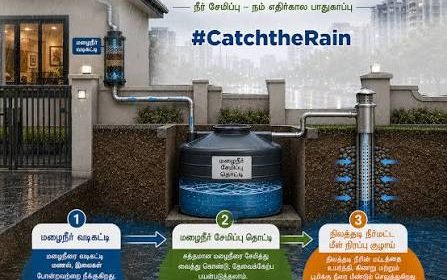
From Abandoned Borewells to Water Lifelines: Tamil Nadu IAS Officer’s Rainwater Harvesting Initiative Inspires India

In an inspiring example of sustainable water management, a pioneering initiative in Tamil Nadu has demonstrated how innovation and environmental stewardship can transform a region’s water security. By converting nearly 1,200 abandoned borewells into rainwater harvesting structures, an administrative intervention has significantly improved groundwater levels, offering a practical model that could be replicated across India.  The initiative was led by IAS officer Prathap Murugan during his tenure as the District Collector of Tiruvallur district. Instead of allowing defunct borewells to remain unused, they were redesigned to channel rainwater deep into…

Read More

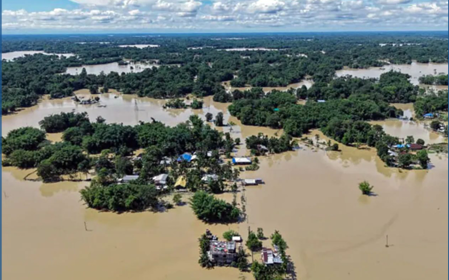
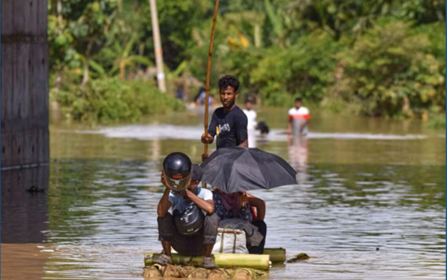
Why Assam is Experiencing Unprecedented Flooding This Year

At least 66 lives have been lost in around a week, close to seven lakh people are affected and the government is yet to reach more than 50,000 people for relief. Assam is in the grip of an unprecedented wave of floods, with people in Upper Assam’s Sivasagar, Charaideo and Jorhat saying they have never experienced such flooding in their lifetimes.  The total population affected is estimated at seven lakh across 856 villages in 12 districts. Entire villages, vast expanses of agricultural land and major towns have been inundated with…

Read More

Reliance Foundation Launches Flood Relief Op in Assam: Water Infra, Health Facilities to Community Support

As Assam recovers from one of its worst flood disasters, Reliance Foundation has initiated a comprehensive humanitarian and recovery effort across Sivasagar and Charaideo districts. The recent floods claimed 81 lives and at their peak affected more than seven lakh people across 12 districts, inundating nearly 900 villages. Over three lakh people continue to remain affected, with damaged infrastructure, disrupted livelihoods, and power outages hampering recovery efforts.  Reliance Foundation has deployed its Water, Sanitation and Hygiene (WASH) expert teams to work with the Public Health Engineering (PHE) Department to restore…

Read More

Gujarat’s Water Conservation Model Delivers Results: Ahmedabad & Gandhinagar Register Significant Groundwater Recovery

Gandhinagar district has reduced its overall stage of groundwater extraction from 181.24% in 2002 to 111.28% in 2025. Although the district remains in the “Over-Exploited” category, the reduction represents significant improvement. Kalol has moved from 243.48% to 44.65%, graduating to the Safe category, while Mansa has improved from 226.37% to 89.35%, shifting to the Semi-Critical category. Dehgam (181.37%) and Gandhinagar taluka (122.87%) remain Over-Exploited. The district receives annual groundwater recharge of 63,300.32 Ham (633.00 MCM) with extractable resources of 57,791.12 Ham against extraction of 64,309.15 Ham. Agriculture accounts for 96.44%…

Read More