

Dr. Debasri Mukherjee, Assistant Director (WASH), SIGMA Foundation
Dr. M.N. Roy, Founder President, SIGMA Foundation
Ms. Sohini Tarafdar, Program Manager, SIGMA Foundation
Introduction
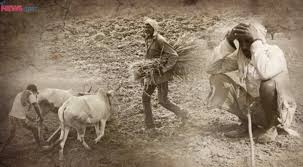
Bundelkhand, a semi-arid region straddling Central India, has long been associated with drought cycles, shrinking groundwater reserves, high input-intensive farming, and recurring agrarian distress. Erratic rainfall, crop failure, debt, and the out-migration of working-age youth have shaped the social and economic fabric of the region. This case study presents lived experiences of three smallholder farmers from Mahoba district in Uttar Pradesh and Panna district in Madhya Pradesh who transitioned from fragile, water-dependent agriculture to resilient agro-ecological farming systems. Their journeys reflect a slow but steady shift toward low-input cultivation, indigenous seed revival, solar-powered irrigation, natural fertilizers, diversified cropping, and community-based resource sharing. Through exposure visits, hands-on training, and access to community-level technologies, these farmers have crafted locally appropriate climate solutions rooted in traditional knowledge and modern innovations.
Local Context
Bundelkhand’s farming communities face layered vulnerabilities:
- Undulating terrain and poor soil structure
- Rapid groundwater depletion and shrinking dug-wells
- Reliance on diesel irrigation and external farm inputs
- Low crop diversity and dependence on hybrid varieties
- Marginal landholdings, especially among socially disadvantaged groups
- Women bearing increased agricultural responsibility due to migration
In Response, community-based initiatives introduced climate-adaptive practices such as:
- Solar-powered irrigation systems to replace diesel pumps
- Natural fertilizers and botanical pest management using local bio resources
- Mixed-cropping and indigenous seed promotion for soil and water resilience
- Bio-mulching and moisture conservation techniques
- Women-centered learning groups and shared farm assets
- Linkages with horticulture, agriculture, and rural livelihood schemes
What emerges is a story not just of technology adoption, but of confidence building, community solidarity, and dignified self-reliance.
Farmer Experiences: The real experience from the field –
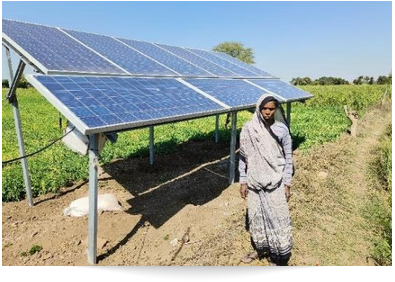
1. The Determined Widow: Mahoba, Uttar Pradesh: Thakki Bai, a widowed farmer from Basoura village, found herself shouldering agricultural responsibilities alone after her son migrated for work & to support medical treatment for his wife. Initially, she cultivated hybrid wheat an input-heavy crop that demanded frequent irrigation, chemical fertilizers, and diesel pumping. High expenses and labor constraints made farming stressful and uncertain. Today, her field tells a different story. She now grows Kathiya wheat, an indigenous variety known for its low water requirement and drought tolerance, alongside peas, mustard, and chillies. Through practical training, she learned to prepare her own compost and plant-based pest repellents, reducing dependence on market inputs. A shared solar pump among five women farmers now irrigates nearly five acres collectively. The pump runs through daylight hours, and water is shared through a turn-based system, strengthening cooperation and reducing irrigation costs entirely. Her eyes light up when she speaks about her thriving crops. She dreams of her son returning home to see her fields and taste the sweet peas and carrots she now grows with pride. “Earlier, farming felt like a burden. Today, it feels like strength” – Thakki Bai.
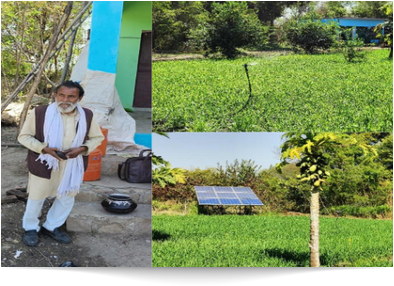
2. Regenerating Soil, Savings and Self-Belief: Mahoba, Uttar Pradesh: In Rehelia village, senior farmer Brindavan Rajput proudly calls himself a “climate-resilient farmer.” Once dependent on diesel pumps, hybrid seeds, and chemical inputs, he now embraces regenerative cultivation. He practices vermicomposting, prepares Matka-based organic fertilizer, and uses botanical pest extracts. A solar-powered sprinkler system has replaced diesel-based irrigation, reducing both fuel expenses and water wastage. His farm now holds fruit trees, seasonal vegetables, and cereals providing year-round income and nutrition. With guidance and linkages to government departments, he accessed quality seeds, fruit saplings, and even support for farm storage infrastructure. His Papaya trees bear fruit symbolizing not just agricultural success, but a shift from vulnerability to agency. “I produce more today, but spend less. That is real progress”-Brindavan Rajput
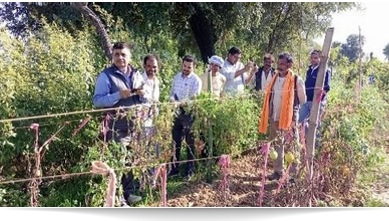
3. Learning From the Land: Panna, Madhya Pradesh: Kamal Kishore, a small landholder from Ramapura village, farms just one acre. Yet his field is a vibrant mosaic of vegetables, pulses, creepers, and fruit saplings. After returning from a long pilgrimage, he feared losing his vermicompost culture but surviving earthworms rekindled his faith in the regenerative system he had learned. He uses bio-mulching with Palash (Butea monosperma) leaves, a traditional practice that shields soil from heat, retains moisture, and slowly enriches it with organic matter. He grows indigenous Arhar and Kathiya wheat, both resilient to water stress. Fruit saplings guava and custard apple promise future income and ecological value. Proud of his efforts, he invites visitors to taste local Arhar Dal with Kathiya roti, calling it “a flavour that stays in the soul.” “Nature doesn’t forget you if you learn to care for it” Kamal Kishore.
Discussion
Across all three cases, farmers moved from external-input-dependent agriculture to knowledge-driven, resource-efficient systems. Key shifts included:
- Replacing diesel pumps with solar-powered irrigation
- Reducing chemical inputs through locally prepared fertilizers and pest solutions
- Restoring biodiversity through indigenous seeds and mixed cropping
- Enhancing household resilience through year-round vegetable and fruit production
- Strengthening community spirit through shared resources and women-led Sytems
- Leveraging government schemes for sustainable infrastructure and
planting material
Collectively, these transformations lowered costs, enhanced soil moisture and fertility, stabilized food supply, and improved household incomes and dignity.
Conclusion
The stories from Bundelkhand reflect more than agricultural change, they reflect a quiet social transformation. Farmers who once faced climate stress, economic burden, and social vulnerability now lead the way in demonstrating resilient, sustainable agriculture. Their example shows that climate adaptation is strongest when rooted in local knowledge, women’s leadership, renewable energy, and community cooperation. Once marked by crisis, Bundelkhand is slowly cultivating a new identity rooted in resilience, pride, and the hope carried in every seed sown and every farmer’s hopeful eyes.