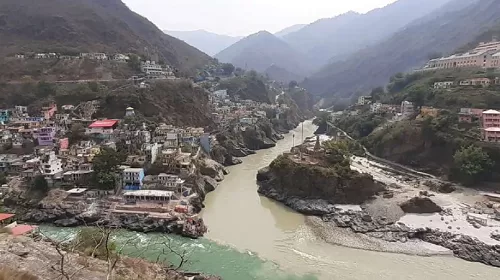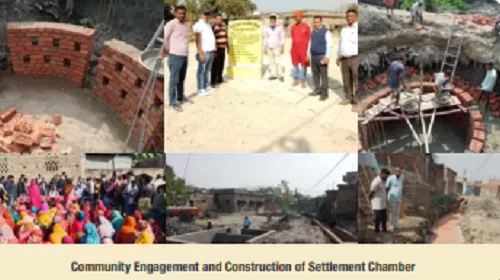

In the heart of East Champaran district’s Sugauli block lies the village panchayat of Dakshini Sugaon, where a significant success story has taken place. The village, particularly wards number 02 and 03, was plagued by a public drain that had become a source of distress for its residents. The accumulation of dirt and waterlogging led to a polluted environment, exacerbating the spread of waterborne diseases and affecting the daily lives of the villagers. For much of the year, especially during the monsoon season, the public drain collected rainwater, which turned…
Read MoreCategory: Case Study
Innovative Solutions for a Municipal Wastewater Treatment Plant
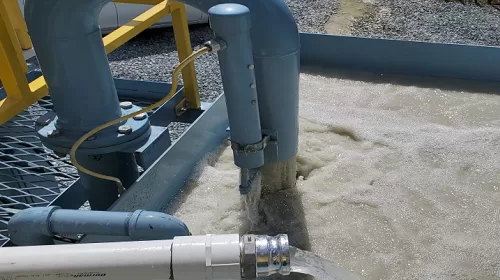
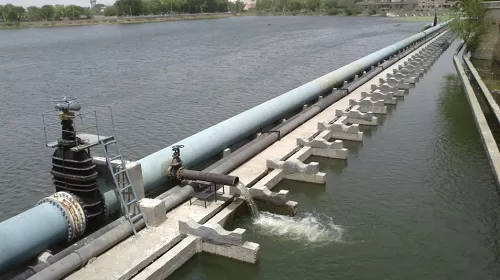
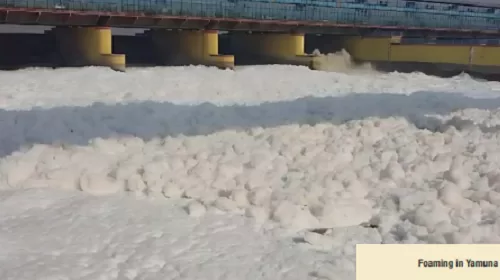
The problem Recently, a local water activist brought to public attention a disturbing phenomenon occurring in the Yamuna River in Delhi, India: vast quantities of white foam were polluting the sacred waterway. The source of this foam was traced not to a single plant, but to multiple municipal wastewater treatment plant along the river. While these plants were treating the water, the discharge process itself was contributing to the problem. Treated water, flowing through channels at high rates, intersected with the city drains at points where there were steep falls.…
Read MoreTurning seawater into Gold: An alternative to Desalination Plants
ABSTRACT This article explores an innovative and economical greenhouse technique that utilizes solar radiation and wind to simulate an artificial hydrologic cycle for harvesting pure water and minerals from seawater. The method employs simple and sustainable technology to evaporate seawater, condense the vapor into pure water, and collect precipitated minerals for further processing. Compared to conventional desalination plants, this approach offers a cost-effective and environmentally friendly solution for addressing global water and mineral needs. The article outlines the methodology, theoretical foundation, financial analysis, and schematic design of this technique. INTRODUCTION…
Read MoreThe power of Sensor Integration, Water Filtration And Real-Time Monitoring
THE IMPORTANCE OF URBAN WATER MANAGEMENT Urban water management is a critical aspect of sustainable development in modern cities. The growing urban population and increasing demand for water resources have put immense pressure on existing water infrastructure. The effective management of water resources in urban areas is essential for ensuring a continuous and reliable water supply for residents, businesses, and industries. Additionally, efficient water management is crucial for environmental sustainability and public health. With the rising challenges posed by climate change and population growth, the need for innovative and effective…
Read MoreWater Care Initiatives in Pakistan: Textile Wastewater Management in Faisalabad
WATER CARE INITIATIVES IN PAKISTAN: ENHANCING ESG AND SDGS COMPLIANCE THROUGH WASTEWATER TREATMENT BACKGROUND: POLLUTION CHALLENGES IN THE TEXTILE SECTOR Faisalabad, known as the “Manchester of Pakistan,” is a significant hub for the textile industry. The city is home to numerous textile mills that contribute substantially to the national economy through exports and employment. However, this booming industry has also led to severe environmental challenges, particularly concerning wastewater management. The textile sector is notorious for generating large volumes of wastewater laden with dyes, chemicals, and other pollutants. Effluent from textile…
Read MoreTransforming India’s Water Management: AECOM’s role in building sustainable water systems
India’s rapid urbanization and industrialization have created significant pressure on the country’s water resources, making sustainable water management one of the most pressing challenges of the 21st century. From erratic rainfall patterns to rising industrial demands, India faces a complex water management landscape that requires innovative, climate-resilient solutions. AECOM, a global leader in infrastructure consulting, has been at the forefront of transforming India’s water management approach by delivering sustainable, technology-driven solutions that meet the needs of both urban and industrial sectors. AECOM ’S PIONEERING ROLE IN WATER MANAGEMENT AECOM has…
Read MoreAlgae outbreaks in reservoirs threaten our Nation’s potable water supply
The U.S. has over 84,000 reservoirs, ranging from large-scale ones like Lake Mead to small municipal reservoirs. Their combined storage capacity exceeds 600 million acre-feet of water. These reservoirs serve various purposes, including drinking water supply, recreation, irrigation, flood control, and hydropower. Some are exclusively for drinking water, some are recreational, and many are multi-use. As public utilities, reservoirs are subject to more stringent management standards and must meet requirements for a range of water quality parameters that are not typically a concern for recreational water bodies. Those responsible include…
Read MoreA Deep Dive into India’s Hydropower Revolution
The importance of hydropower in India’s energy landscape, a pivotal player in the face of escalating energy needs and the global push towards sustainability. In our pursuit to decrease dependence on fossil fuels and tackle the obstacles posed by climate change, the multifaceted advantages of hydropower have emerged as a prominent solution, leading us towards a future of energy that is both sustainable and resilient. A NEED FOR STABILITY WITH RENEWABLE ENERGY In the realm of renewable energy, solar and wind power, while champions of cleanliness, pose a unique challenge…
Read MoreAqua relies on Hydraulic Modelling to assist during Illinois Emergency Outage
Leveraging OpenFlows Water accelerated the recovery schedule and reduced impacted customers by 90%. THE DANVILLE DEEP FREEZE AQUA, the owner and operator of over 1,700 public water and wastewater systems across their eightstate platform, provides drinking water to approximately 3 million people and wastewater service to about 250,000. TheirIllinois branch serves a total of 280,000 people spanning 14 counties, with about 20,000 connections alone in the city of Danville. In January 2024, the city experienced a deep freeze that impacted the treatment plant and, subsequently, the water service throughout the…
Read MoreCatalysing Water Security in rural India ‘Industry-CSR & Civil Society Organization’ collaboration
INTRODUCTIONIndia’s development hinges on water security , yet it ranks 2nd in water consumption and 132 in water availability per capita , highlighting a critical challenge. The country’s agrarian economy relies heavily on water, with 80 percent used for agriculture. India’s water crisis is essentially an issue of the growing population rate of about 0.8% per year , with the United Nations and other demographic studies estimating that India’s population may stabilize only around the 2060s, at about 1.7 billion. India has the ability to ‘survive’ till then and beyond…
Read More