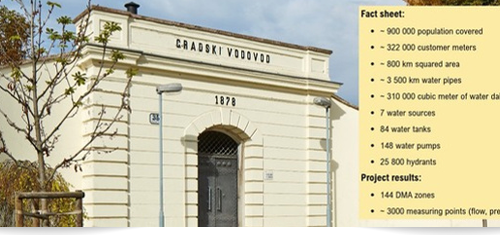

Sandra DiMatteo, Marketing Director, Bentley Systems Modernizing One of the World’s Oldest Water Supply Systems Originally constructed in 1878, the 144-year-old Zagreb water supply system is one of the oldest functioning water networks in the world. At that time, the capacity of the constructed system was 53.2 liters per second via a 4-kilometer-long pipeline that provides water to 11,150 of the 30,000 inhabitants in Zagreb, the capital and largest city of Croatia. ViO Zagreb has been responsible for the city’s public water supply since its inception, including construction and rehabilitation…
Read MoreCategory: Indepth
Role of Nico Nanobubble Technology in Ultrapure Water Management for the Semiconductor Industry
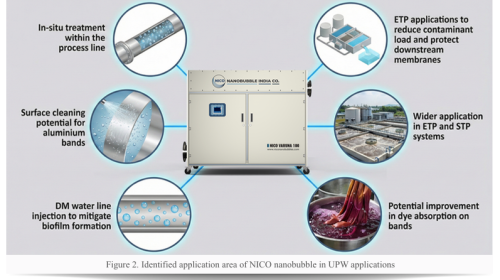
Amit Kapur, Founder, Chairman & Managing Director, NICO Nanobubble India Co. Semiconductor Industry: Water Quality Imperatives and Strategic Challenges Semiconductor and advanced electronics manufacturing is fundamentally dependent on ultrapure water (UPW). UPW is used across critical steps such as wafer cleaning and rinsing, photolithography support operations, etching, plating/anodic processes in adjacent electronics lines, Chemical Mechanical Planarization (CMP) support rinses, and chemical dilution where applicable. As device geometries continue to shrink and defect tolerance narrows, the water specification envelope becomes increasingly stringent not only for ionic purity and Total Organic Carbon…
Read MoreSewage to Bio-CNG: Transforming Urban Waste Into a Strategic Energy Resource
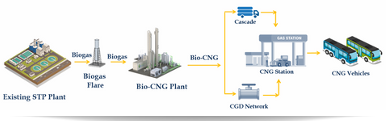
Anoop V Kartha, Head – Special Initiatives, VA TECH WABAG LIMITED Introduction As nations commit to aggressive decarbonization, the demand for sustainable, renewable fuels has reached an all-time high. In India, a transformative solution is emerging from an unlikely source: municipal sewage. Traditionally viewed as a sanitation burden & a source of environmental pollution, sewage is now being redefined as a strategic energy asset. By capturing methane from wastewater treatment & upgrading it into Bio-CNG (Compressed Biogas), cities can address waste management, reduce greenhouse gas emissions & bolster national energy…
Read MoreFirst Large-scale Pilot Demonstration of Novel Nano-selective Forward Osmosis Technology for Improved Resource Recovery From Zero Liquid Discharge (Zld) Processes and Optimized Industrial Processes
By Shreyansh Shah, Director, at LEXCRU Water Tech Pvt. Ltd Sanalkumar, Associate Vice President, at LEXCRU Water Tech Pvt. LtdZuo Jian, Co-founder, at SideStroem Water Technologies Pte. Ltd The growing need for ZLD Access to clean water is no longer a certainty—it’s an emerging fault line of global stability. In 2024, São Paulo narrowly avoided a second major “Day Zero” as drought once again pushed its reservoirs to historic lows. Kenya is facing its worst water crisis in 40 years, affecting millions with a lack of clean water and food while…
Read MoreHigh Water Consumption in Hospitals: Evidence, Real Cases and Sustainability Challenges
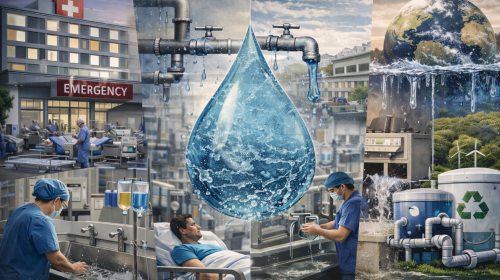
Hospitals are among the most water‑intensive buildings in any city. Unlike residential or commercial structures, healthcare facilities depend heavily on water for hygiene, patient care, medical procedures, sanitation, and cooling systems. This article explains why hospitals consume such large volumes of water, supported by real research studies and verified news reports. Why Do Hospitals Consume So Much Water? Water is essential to maintain strict hygiene and infection‑control standards in hospitals. It is used continuously for handwashing, cleaning wards, sterilizing surgical instruments, washing linens, operating kitchens, and flushing toilets. Large hospitals…
Read MoreRiver Monitoring System With Qdos Pumps Supports Environmental Protection and Public Health
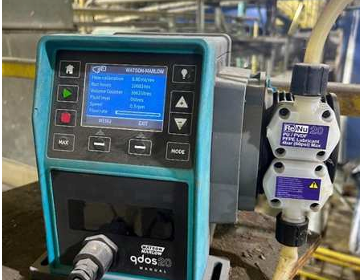
Wild swimmers gain real-time data on the health of rivers from monitoring devices which integrates a Qdos peristaltic pump Qdos peristaltic pumps play a crucial role in a new monitoring system that is measuring the quality of river water in the United Kingdom, which provides real-time data that benefits both the environment and wild swimmers. Working with the Environment Agency and Meteor Communications, the River Severn Partnership has installed two monitors on the River Teme in Ludlow and on the River Severn in Shrewsbury, both in Shropshire, England. In February…
Read MoreUnlocking the Power of Modular Systems in Water Treatment
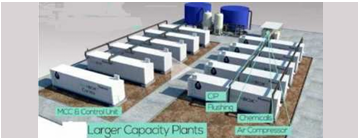
Contamination remains one of the most pressing issues in water treatment. Pollutants such as heavy metals, pesticides, pharmaceuticals, and microplastics pose significant health risks. Furthermore, pathogens, including bacteria and viruses can enter water sources and lead to outbreaks of waterborne diseases. Population growth and industrialization further stress water resources, highlighting the need for innovative solutions to meet rising demand. The water treatment industry has embraced several transformative technologies to combat contamination effectively and enhance treatment efficiency. These include AI-driven monitoring, advanced filtration systems, smart infrastructure, membrane filtration, bio & carbon-based…
Read MoreBeyond Storage: How Water Tanks Can Improve Public Health and Ensure Hygiene
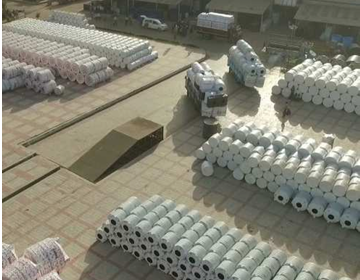
Today, India bears a significant national health burden due to waterborne illnesses. Water contamination and poor water storage is a direct public health concern. Contaminated water is a primary cause of waterborne diseases like cholera, typhoid, and dysentery, which affect large sections of the population each year. Diarrhoea is the third most common cause of childhood mortality in India, claiming nearly 13% of lives in children under five years of age. Basic sanitation & hygiene and clean drinking water are fundamental to human development, health and well-being and absence of…
Read MoreSmart Wastewater Pumping: Engineering a Resilient and Sustainable Future
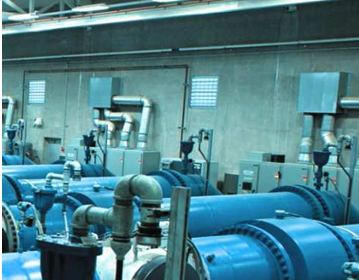
Home to nearly one-fifth of the global population, India today stands as one of the fastest-growing economies and a nation shaping the future of technology, infrastructure, and sustainable development. Yet, alongside this remarkable progress lies a critical challenge, water stress. The country is experiencing rapid depletion of freshwater sources, increasing contamination of rivers and groundwater, and a surge in wastewater generation from domestic, industrial, and agricultural activities. Without timely intervention, the imbalance between demand and availability could widen further, threatening long-term water security and public health. While metropolitan regions continue…
Read MoreMicroplastic Contamination in Water Resources of India
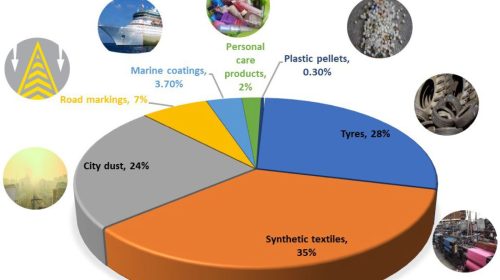
Microplastics in water resources are an emerging global concern because of their persistence, mobility, and potential ecological and human health risks. India’s rivers, lakes, aquifers, and coasts are increasingly burdened by microplastics. Over the past decade, evidence from field surveys and laboratory analyses has confirmed that microplastics (MPs) are now present across the country’s freshwater and marine systems, with hotspots near dense populations and industrial hubs. What are Microplastics? Microplastics are plastic particles smaller than 5 mm. They can be:• Primary microplastics – manufactured small particles (e.g., cosmetic microbeads, industrial…
Read More