
Hospitals are among the most water‑intensive buildings in any city. Unlike residential or commercial structures, healthcare facilities depend heavily on water for hygiene, patient care, medical procedures, sanitation, and cooling systems. This article explains why hospitals consume such large volumes of water, supported by real research studies and verified news reports.
Why Do Hospitals Consume So Much Water?
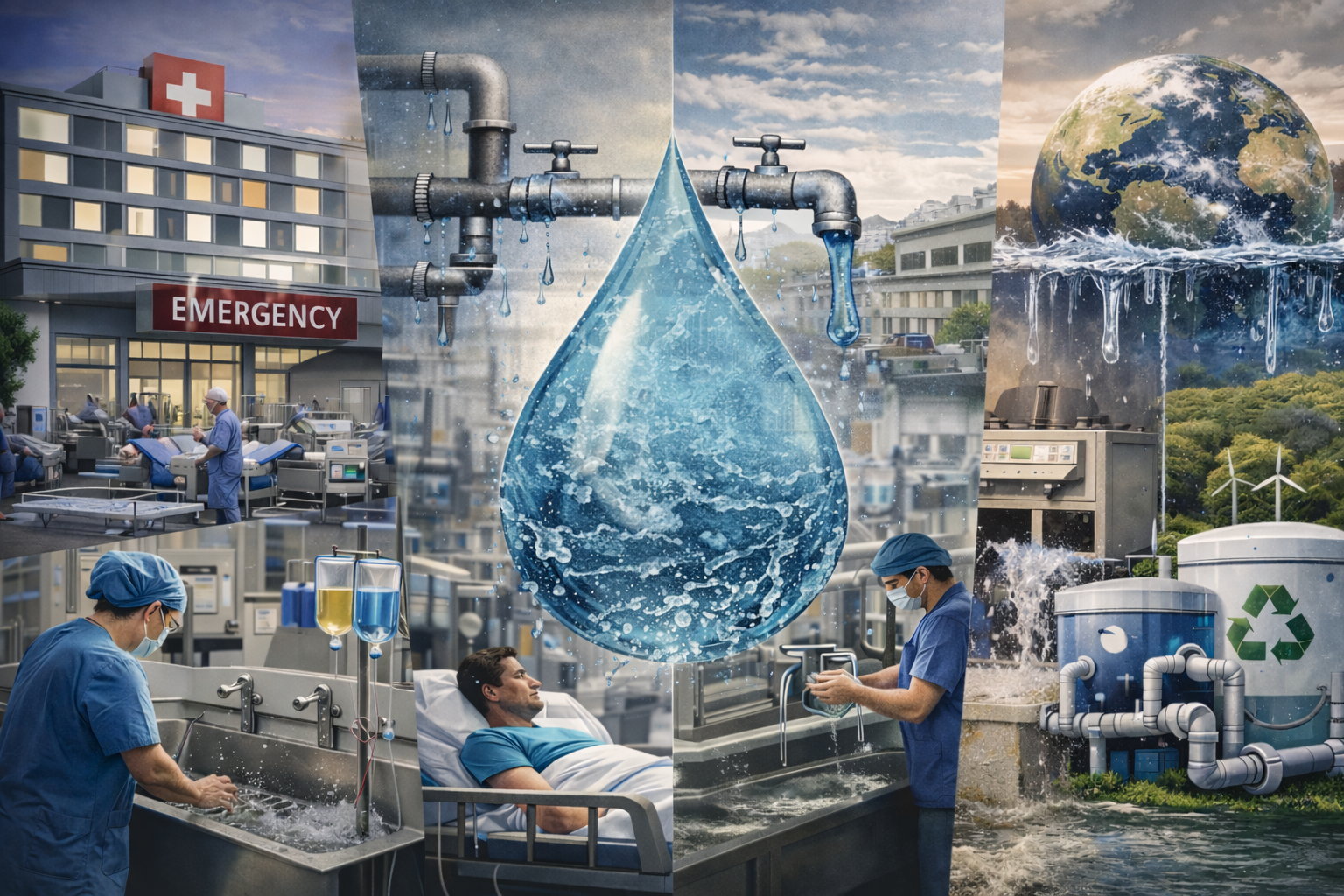
Water is essential to maintain strict hygiene and infection‑control standards in hospitals. It is used continuously for handwashing, cleaning wards, sterilizing surgical instruments, washing linens, operating kitchens, and flushing toilets. Large hospitals also rely on water‑based HVAC and cooling systems, which significantly increase overall consumption.
Research Evidence: Water Use in Hospitals
A peer‑reviewed study published in the Journal of Anaesthesia & Clinical Medicine examined water usage in a multi‑speciality cancer hospital in India. The study found that the hospital consumed nearly 200,000 liters of treated water per day. On average, this amounted to approximately 1,093 liters of water per patient per day.
The research revealed that only about 1% of the water was used for drinking purposes. A major share was consumed by HVAC systems, toilet flushing, handwashing, laundry, and general sanitation. This clearly demonstrates that hospital water demand is driven mainly by operational and hygiene requirements.
Global Perspective on Hospital Water Consumption
International studies also confirm that hospitals worldwide are heavy water users. Research published in the MDPI Water Journal indicates that hospitals typically consume around 1,000 liters of water per bed per day, with figures in some developed countries exceeding 2,000 liters per bed per day. These values are far higher than those observed in office buildings or educational institutions.
Real News Evidence from Indian Hospitals
Real‑world news reports further highlight water‑related challenges in hospitals. In November 2025, the Institute of Obstetrics and Gynecology (IOG) in Chennai was reported in Navbharat Times for severe water shortages. Patients and their attendants complained about the lack of drinking water and poorly maintained toilet facilities, underlining how water scarcity can directly affect patient care.
Another case was reported by Live Hindustan in 2025 at SRN Hospital, Prayagraj. A malfunctioning RO water cooler was found to be wasting nearly 300 liters of potable water per hour. This incident highlighted how poor maintenance and outdated infrastructure can lead to massive water wastage in hospitals.
Impacts of High Water Consumption
Excessive water consumption places financial and environmental pressure on hospitals. High water usage increases utility costs and wastewater treatment expenses. In regions facing water scarcity, hospitals may struggle to maintain uninterrupted services. Moreover, inadequate water management can increase the risk of hospital‑acquired infections if water quality is compromised.
Sustainable Solutions for Hospitals
Hospitals can reduce water consumption without compromising patient safety by adopting sustainable practices. These include regular water audits, installation of water‑efficient fixtures, reuse of treated greywater for flushing and landscaping, rainwater harvesting, and real‑time monitoring of water usage. Training hospital staff in water conservation practices is also essential.
Conclusion
Hospitals inherently require large volumes of water due to their critical role in healthcare delivery. However, research studies and real news examples show that inefficient water use and poor management can lead to waste, higher costs, and service disruptions. By implementing modern water management strategies, hospitals can ensure sustainable operations while continuing to provide high‑quality patient care.