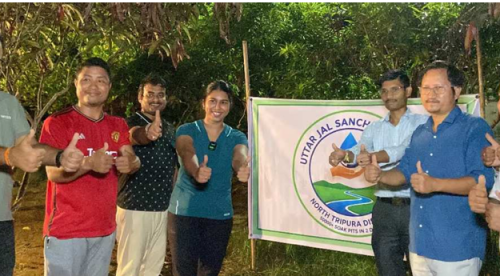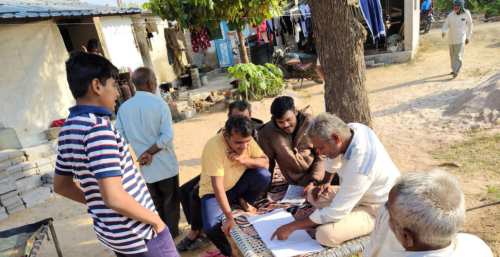

As every drop of water counts, a low-cost water harvesting pit initiative in Jangaon district has caught national attention. To conserve water, government employees in Jangaon have joined a voluntary effort and constructed nearly 7,175 rainwater harvesting pits on a war footing. It is estimated that this effort will yield at least one TMC of water, increasing groundwater levels over a period of time. The National Water Mission (NWM), Ministry of Jal Shakti, Department of Water Resources, Government of India, has lauded the “people-driven, low-cost water conservation structures.” “Every drop…
Read MoreTag: water treatment
Pmc News: Pune to Deploy Leak Detection Squad as Water Losses Mount
Facing growing concerns over water wastage, the Pune Municipal Corporation (PMC) will roll out a dedicated “leak detection squad” next month. The move aims to plug losses in the supply network and make better use of the city’s limited water resources. PMC sources said the city receives nearly 20 TMC of water every year, but about 40 percent never reaches homes. Losses occur due to evaporation, seepage in dams, and leakages in the pipeline system. Civic officials said the new squad will regularly inspect the network and repair damaged sections.…
Read MoreLet’s Talk Water: Bengaluru Startup Ecostp Bets on Natural Sewage Treatment to Tackle India’s Water Crisis
With India’s population crossing 1.4 billion, and Karnataka alone home to nearly 1.5 crore people, sewage has become one of the country’s most pressing challenges. (ECOSTP) Most people do not understand sewage, and fewer still care about it. Speaking on South First’s Let’s Talk Water podcast, Tharun Kumar, CEO and Founder of ECOSTP, a Bengaluru-based startup reimagining wastewater treatment, highlighted how homebuyers often prioritise bathroom fittings, lakes or parks, but rarely check for the presence of a sewage treatment plant (STP). “Recently, even builders have started advertising on radio asking…
Read MoreHeavy Rains Keep Punjab Rivers in Spate, Relief Efforts Intensify
The flood situation in Punjab has further intensified with incessant rain lashing several districts and rivers, including the Ghaggar and Beas, flowing in spate. The Ravi, which witnessed very high inflows last week, has inundated large parts of border towns and nearby villages. According to officials, improvement is expected only once water flow reduces and moves downstream. Many parts of Amritsar and surrounding villages have been severely impacted, with reports of extensive damage to houses, farmlands, and infrastructure. More than 1,000 villages have been affected due to overflowing rivers and…
Read MoreHonorable Union Jal Shakti Minister Shri C.R. Patil unveils ‘Jalkranti’, applauds Gujarat’s water conservation efforts.
Ahmedabad witnessed a significant moment in the state’s water conservation journey with the launch of ‘Jalkranti’, a book authored by Shri Mansukh Suvagiya, widely regarded as the pioneer of Gujarat’s grassroots water revolution. The book was unveiled by Hon’ble Union Minister of Jal Shakti and President, BJP Gujarat, Shri C.R. Paatil, in the presence of senior Ministers, Members of Parliament, and social leaders. Addressing the gathering, Shri Paatil commended Shri Suvagiya’s decades-long commitment to water conservation, highlighting his leadership in the construction of more than 3,200 check dams and lakes…
Read MoreROUNDTABLE CONFERENCE ON SWACHH BHARAT MISSION GRAMEEN (SBM-G) FOCUSES ON SUSTAINABILITY, COMMUNITY OWNERSHIP, AND CREDIBLE PROGRESS FOR SWACHH BHARAT MISSION
The Department of Drinking Water and Sanitation convened a Roundtable Conference on Swachh Bharat Mission Grameen (SBM-G) at Bharat Mandapam, New Delhi. The meeting brought together State Ministers and officials from 28 States/UTs to review progress and chart the next phase of rural sanitation. Union Minister Shri C.R. Patil praised collective achievements and stressed innovation, waste-to energy, and climate-resilient sanitation. He emphasized that SBM-G and JJM together ensure sustainable sanitation and water security. With every rural household receiving tap water through JJM, effective greywater management under SBM-G becomes crucial. The…
Read MoreAdvancing Water Treatment for a Sustainable Future
On the World Water Day, we come together to recognize the need for clean and pollution free water and sustainable management of our planet’s most vital resource. This year’s theme, Glacier Preservation, draws our attention to the alarming rate of glaciers melting due to climate change, uncontrolled human activities and the profound impact it has on global water security. Glaciers are the lifeline of many of the world’s major river systems, serving as natural reservoirs that supply freshwater to global population. In India, the Himalayan glaciers are crucial for sustaining…
Read MoreGreater Noida Authority to build 5 Sewage Treatment Plants
The Greater Noida Authority has approved the construction of five sewage treatment plants (STPs) to enhance wastewater management and recycling for irrigation purposes. Among these, a `40 crore estimate for a 12 MLD STP in Sector IT City received in-principle approval from CEO Ravi Kumar NG after IIT Delhi endorsed the detailed project report. The planned STPs include a 45 MLD plant in Sector 45, a 50 MLD plant in Knowledge Park V, a 42 MLD plant in Ecotech VI, and a 72 MLD plant in Sector MU. The CEO…
Read MoreNanobubble Technology: Transforming the Landscape of Sustainable Water Management
In the face of escalating global water challenges, innovative solutions are critical for ensuring sustainable water management. Nanobubble technology, an emerging advancement in water treatment, is revolutionizing how industries, agriculture, and municipalities address water quality, conservation, and reuse. WHAT IS NANO-BUBBLE? Imagine bubbles so small that they’re nearly invisible to the naked eye — yet powerful enough to transform industries and ecosystems. Welcome to the world of nanobubbles. These ultra-tiny gas bubbles, smaller than 200 nanometers in diameter (about 500 times smaller than a human hair!), are breaking the rules…
Read MoreTreatment technologies for Poly- and Perfluoroalkyl (PFAs) substances in water and other wastes
Per- and polyfluoroalkyl substances (PFAS) are a set of substances that have been used since the 1940s in various industrial applications like paper making, textile mills, electroplating, firefighting foams and in consumer products like non-stick cookware, stain repellent clothing, food contact materials, paints, cosmetics, detergents and other cleaning products. The term ‘PFAS’ is accepted as the overarching term for the entire class of these synthetic compounds. There are more than 9000 known PFAS compounds, but the global regulation list covers less than 50 compounds. Out of these many PFAS compounds,…
Read More