
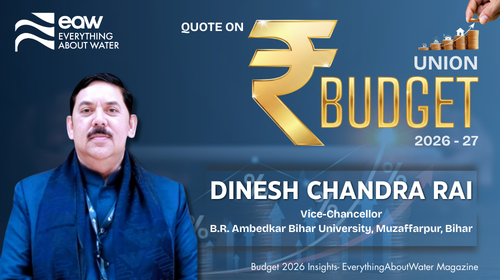
Prof. Dinesh Chandra Rai, Vice-Chancellor, B.R. Ambedkar Bihar University, Muzaffarpur, Bihar
The Union Budget 2026-27 goes beyond just listing funds; it pushes forward the goals of the National Education Policy (NEP) 2020. With ₹1.39 lakh crore set aside for education, it boosts India’s aim to build a knowledge-driven economy. The focus is on making education easier to access, along with promoting new ideas, research, and skills. If carried out well on the ground, reaching 50% enrollment in higher education by 2035 will be straightforward.
The ₹55,727 crore for higher education supports NEP’s broad approach. For states like Bihar, which need better basic setups, upgrading places like IIT Patna brings new energy. Modernizing top technical schools in different areas helps reduce gaps, giving local talent chances to grow and aiding state economies.
A fresh idea in the budget is creating university townships near big industrial zones. These combined setups cut the distance between schools and businesses. Students will get both classroom learning and real-world training. This matches NEP’s push to mix job skills into education from the start. ₹500 crore goes to Artificial Intelligence Centers of Excellence, putting India ahead in the global digital space.
The BharatNet project links rural high schools with fast internet and offers digital materials in Indian languages. This step closes the digital gap in remote spots where lack of resources holds back bright students.
The Skill Development Ministry’s budget jumps 62%, showing education will focus on real abilities, not just degrees. Wider apprentice programs with small and medium businesses, plus five new top centers, connect young people straight to jobs. A high-level group on “education to jobs and business” will shape courses to match market needs, solving the issue of jobless graduates for good. Expanding the Prime Minister’s Research Fellowship and building hostels for girls promotes equal chances.
Challenges remain: Public spending on education is still around 4% of GDP, below the 6% goal. Uneven rollout at state levels and rural-urban setup differences could slow things. Strong teamwork between center and states is key. Beyond upgrading buildings, improve teaching quality and ongoing teacher training. Cut red tape to use research funds on time and right.
In the end, Budget 2026 smartly assigns resources to energize education. Fixing issues quickly and sticking to the plan can make ‘Developed India 2047’ real. It shapes India’s youth into creators and business owners, not just workers.