
The River Crisis: Why Industry Must Begin to Lead Cleanup

Water

India holds roughly 18% of the world’s population but only about 4% of its renewable freshwater resources, raising the stakes of river degradation. Across the country, untreated industrial wastewater contaminates rivers including the Yamuna, Ganga, Sabarmati and Jojari, with many tributaries critically degraded and facing functional collapse in coming decades. A major contributor is the textile and tannery industry, which consumes vast amounts of water and generates difficult-to-remove waste. Polluted rivers threaten drinking water, farm productivity, public health and local economies. Studies near Kanpur’s tanneries show chromium in groundwater far…

Read More

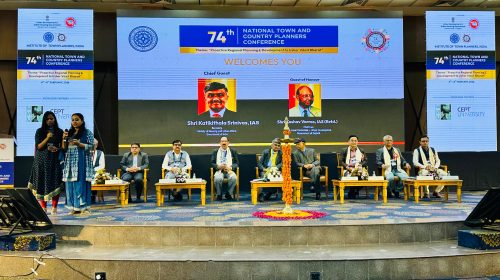
Design for people and productivity, not just space, says MoHUA Secretary at NTCP conference

Ahmedabad: Urban planning in India must move beyond drawing city boundaries and focus on people, productivity and time efficiency, K. Srinivas, Secretary, Union Ministry of Housing and Urban Affairs (MoHUA), said on Thursday while inaugurating the 74th National Town & Country Planners Conference organised by the Institute of Town Planners, India (ITPI). Mr. Srinivas said urbanisation has now been recognised as a positive force for economic growth, with town planners emerging as key stakeholders in India’s development story. “It is no longer enough to design cities in kilometres. There is…

Read More

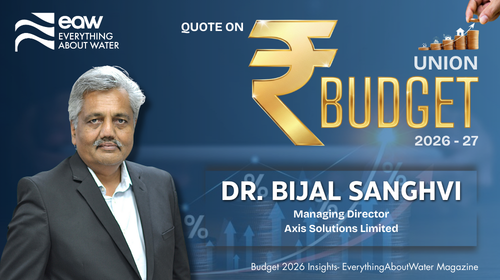
Quote from Dr. Bijal Sanghvi, Managing Director, Axis Solutions Limited

Budget 2026 sets a decisive direction for India’s manufacturing sector by reinforcing the ambition of **Viksit Bharat** through technology-led, sustainable growth. The emphasis on advanced manufacturing, digital infrastructure, and green initiatives reflects a clear intent to build globally competitive yet responsible enterprises. Digital transformation, driven by IIoT, enables plants to operate with precision and foresight. Integrated plant dashboards, supported by real-time data analytics and continuous monitoring, empower leadership with actionable insights—improving productivity, energy efficiency, and operational resilience. Such capabilities are no longer optional; they are fundamental to achieving scale with…

Read More

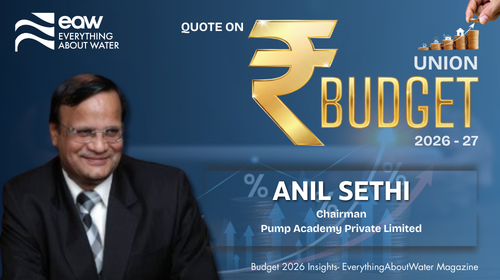
Budget 2026–27: Path to a Low-Carbon, Energy-Efficient Future

Anil Sethi, Chairman, Pump Academy Private Limited The Union Budget 2026–27 highlights India’s fast progress toward deep decarbonisation and improved energy efficiency. As the country moves steadily toward exceeding its 2030 target of reducing emissions intensity by 45%, India is now expected to achieve a 48–57% reduction compared to 2005 levels. The budget announcement of ₹20,000 crore allocation over five years to promote Carbon Capture, Utilisation and Storage (CCUS) technologies is a significant and timely step. This initiative marks a major milestone in India’s efforts to reduce industrial emissions and…

Read More

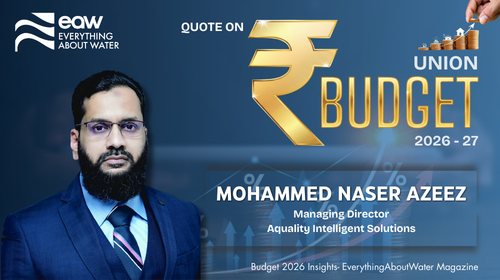
Budget 2026–27: Roadmap to Sustainable Development

Mohammed Naser Azeez, Managing Director, Aquality Intelligent Solutions  The Union Budget 2026–27 presents a landmark opportunity for companies operating in infrastructure development, water management, air purification, and sustainable energy sectors. The government’s decisive push toward environmental resilience and clean infrastructure underscores the urgent need for intelligent, technology-driven solutions; precisely what Aquality Intelligent Solutions delivers. Urban Infrstructure and water supply remains the centrepiece of this budget. The combined allocations in water supply across flagship programmes total over ₹84,000 crore, positioning India to achieve universal clean water access within this decade. Aquality’s…

Read More

Budget 2026–27: Advancing Water Infrastructure for Economic Growth

Abdul Rahman Mohammed, CEO, Sahara Industry The Union Budget 2026–27 presents a strong and forward-looking roadmap for India’s infrastructure-led growth. The continued focus on capital investment, urban development, water security, and sustainable infrastructure reflects the government’s intent to build long-term economic resilience while improving the quality of life for citizens.  The ₹85,222 crore allocation for urban development projects will significantly enhance city infrastructure by improving water supply and sanitation systems. The combined investments across key water infrastructure programmes represent a comprehensive national strategy to address water scarcity, improve sanitation access,…

Read More

Budget Review: Sharad Bhushan – Executive Director – EWE India at AECOM

Union Budget 2026 marks a decisive shift in how India approaches water security while treating water not as a welfare obligation, but as strategic national infrastructure. The enhanced allocation of ~₹67,000 crore for the Jal Jeevan Mission directly addresses the funding shortfalls and delivery gaps of recent past years, where underspending constrained last-mile execution. At a time of growing groundwater stress, quality challenges, and climate volatility, this scale-up is both timely and necessary. Importantly, the Budget signals a move beyond connection-led metrics toward sustained service delivery, reliability, and water quality,…

Read More

Quote From Manish Jain, Managing Director, Enviro Infra Engineers Limited

“India’s Union Budget 2026 reinforces the government’s continued commitment to infrastructure led growth, sustainability and environmental resilience. The substantial increase in public capital expenditure to a record ₹12.2 lakh crore underlines a strong push for modern and integrated infrastructure development across transport, logistics, urban and water systems — a priority that directly expands opportunities in water, wastewater, sanitation and environmental engineering. The emphasis on creating new national waterways, enhancing multimodal logistics, and strengthening urban infrastructure aligns closely with our strategic focus on delivering advanced and scalable environmental solutions. This policy environment also…

Read More

Quote from Pradeep Kanthed, Ceo, Tatanagar Metal Industries

The Union Budget 2026-27, presented by Finance Minister Nirmala Sitharaman on January 31, 2026, emphasizes three “kartavyas”: accelerating economic growth, fulfilling aspirations, and ensuring inclusive development under Viksit Bharat.  It targets a fiscal deficit of 4.3% of GDP, down from 4.4% in FY 26 RE, with total expenditure at ₹35.3 lakh crore, prioritizing capex at ₹17.1 lakh crore. Fiscal Strategy The budget maintains fiscal prudence amid global uncertainties, aiming for a debt-to-GDP ratio of 50±1% by FY 31. Revenue receipts are projected at ₹18.1 lakh crore, driven by robust tax…

Read More

Union Budget 2026–27 in eyes of Technologists : A Systems-Level Blueprint for Growth

Dr Mayur J. Kapadia Former AGM, Quality Control Dept, GNFC Ltd, Bharuch, Gujarat    TC Member & Resource Person, Bureau of Indian Standards    Trainer & Technical Writer    ‘Elsevier’ Author. Union Budget 2026–27 is the first budget prepared at the newly established Kartavya Bhavan. Structured around 3 core Kartavyas, it is a systems-level design document for the country’s next growth phase. While presenting it on 1st Feb, 2026, the FM defined 3 Kartavyas as (i) accelerating and sustaining economic growth, (ii) fulfilling aspirations through capacity building, and (iii) ensuring inclusive development…

Read More