
Have you ever paused to consider how deeply artificial intelligence (AI) influences our lives and the economy today, and more importantly, what its future holds? Right now, AI mainly boosts administrative productivity, but soon it will drive groundbreaking inventions, accelerate critical research, develop life-saving drugs, and enable revolutionary advances in robotics. Behind this promising digital frontier lies an often-overlooked challenge: water. Data centers, the critical infrastructure supporting AI, require immense volumes of water for cooling. How can we sustain the enormous potential of AI-driven innovation without exhausting our precious freshwater…
Read MoreAuthor: eawater
High Water Consumption in Hospitals: Evidence, Real Cases and Sustainability Challenges
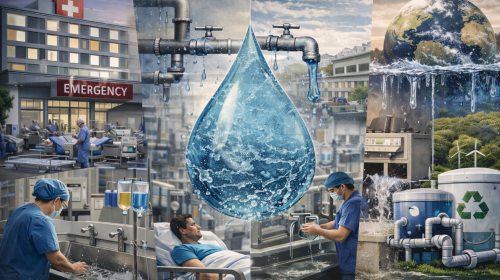
Hospitals are among the most water‑intensive buildings in any city. Unlike residential or commercial structures, healthcare facilities depend heavily on water for hygiene, patient care, medical procedures, sanitation, and cooling systems. This article explains why hospitals consume such large volumes of water, supported by real research studies and verified news reports. Why Do Hospitals Consume So Much Water? Water is essential to maintain strict hygiene and infection‑control standards in hospitals. It is used continuously for handwashing, cleaning wards, sterilizing surgical instruments, washing linens, operating kitchens, and flushing toilets. Large hospitals…
Read MoreTHE FUTURE OF WASTEWATER TREATMENT AND MANAGEMENT: EMERGING TECHNOLOGIES AND REAL-WORLD IMPACT (WITH AN INDIA PERSPECTIVE)
By Sharad Bhushan Executive Director, EWE, India, AECOM Wastewater management is undergoing a profound transformation evolving from a narrow “end-of-pipe” compliance exercise into a cornerstone of the circular economy. The sector is no longer about mere disposal but about value recovery: reclaiming water, nutrients, and energy while reducing emissions, protecting public health, and strengthening the resilience of urban and industrial systems. This article brings together the latest technological trends, practical innovations, and real-world applications including AECOM’s impactful work in India to present a holistic view of where wastewater innovation is…
Read MoreNX Filtration partners with Applied Membranes Inc for pharmaceutical wastewater reuse in the USA
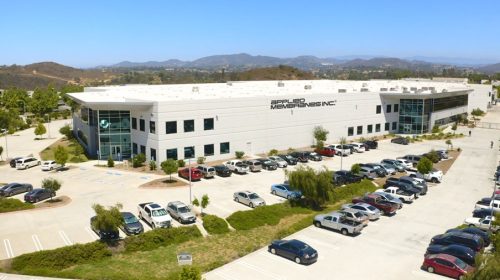
Hengelo, the Netherlands, 12 February 2026 Applied Membranes Inc (AMI), a USA-based provider of advanced water and wastewater treatment solutions, will be using NX Filtration’s hollow fiber nanofiltration (HFNF) membranes for advanced wastewater reuse at a pharmaceutical company. The pharmaceutical company seeks to reduce its freshwater intake and wastewater discharge by reusing its process water. AMI selected NX Filtration’s HFNF technology to remove high concentrations of organic compounds from the company’s wastewater stream. Combining this treated wastewater with a reverse osmosis (RO) system enables an efficient and robust water reuse…
Read MorePhosphate-Free Corrosion Inhibitor Protects Hydrotested Drinking Water Systems
How often do you think about drinking water storage tanks and the plumbing behind your walls? Unless you’re a plumber or building contractor, these components probably don’t come to mind often. But out of sight does not mean out of mind for corrosion, which can compromise drinking water pipes and tanks before they are ever put into service. As a result, Cortec® is encouraging contractors and plumbers to spread the word about VpCI®-649 HP, a phosphate-free corrosion inhibitor for protection during and after hydrotesting. Hydrotesting of drinking water piping, fittings,…
Read MoreUk Government Unveils Revamped Environment Plan Backed by Major Funding for Nature Recovery
The UK government has announced a strengthened Environmental Improvement Plan aimed at restoring England’s natural environment, cutting pollution and supporting sustainable economic growth. The revised strategy, published on Monday 1 December 2025, outlines a five-year roadmap backed by hundreds of millions of pounds to revitalise landscapes, improve air and water quality, and protect wildlife Under new measures, population exposure to fine particulate matter (PM2.5) — a pollutant linked to asthma, lung disease and heart conditions — will be reduced by 30% by 2030 compared with 2018 levels. The target is…
Read MoreIndia Installs 45,911 Solar Water Pumps in Maharashtra
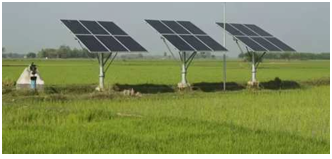
MSEDCL, the state-owned power distribution utility, announced that the state installed 45,911 solar water pumps in one month, completing its Guinness World Records attempt under the Magel Tyala Solar Pump initiative. MSEDCL said the deployment represents one of the largest and fastest renewable energy irrigation installations globally and was designed to expand solar-powered agricultural infrastructure across multiple districts in Maharashtra. Shakti Pumps (India) Ltd. emerged as the largest contributor to the installations, completing 8,846 solar pump systems, the highest total among participating companies. The audited period for the Guinness World…
Read MoreArtificial Rain: First Cloud Seeding Trial Conducted in Parts of Delhi
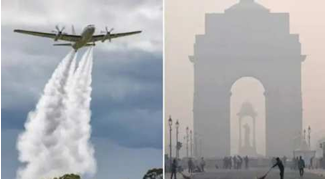
Delhi has conducted its first cloud-seeding trial, using aircraft to disperse silver iodide and sodium chloride over areas such as Burari and Karol Bagh. The initiative, led by the Delhi government in collaboration with IIT Kanpur, seeks to trigger artificial rainfall to wash out particulate pollution. This trial reflects a significant shift in Delhi’s environmental strategy; from reactive pollution control to proactive, technology-driven interventions. While cloud seeding has been used in other parts of the world, its application here underscores how water-industry thinking must increasingly overlap with meteorology and atmospheric…
Read MoreUnion Budget 2026: A Turning Point for India’s Water & Sustainability Ecosystem
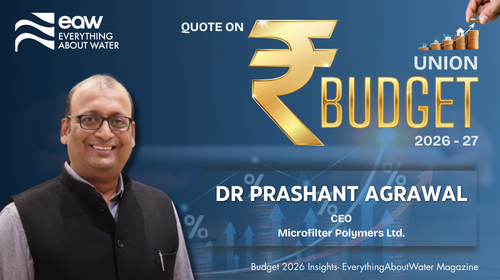
Dr Prashant Agrawal, CEO,Microfilter Polymers Ltd. India When I look at the Union Budget 2026, I don’t just see numbers or allocations, I see intent. An intent to build a more resilient, sustainable and infrastructure-ready India. For those of us working in the water and environmental solutions sector, this budget quietly but clearly signals a decade of opportunity. Water security is no longer a social issue alone; it has become an economic imperative. As cities expand, industries scale and climate variability increase, every litre of water must be treated, reused…
Read MoreNEP Accelerated: Budget 2026’s Roadmap to a Knowledge Economy
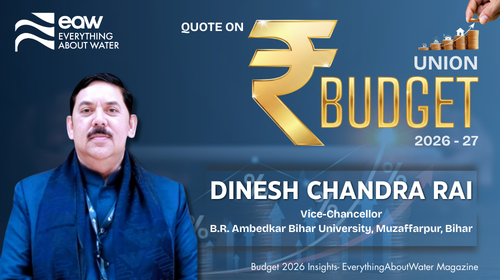
Prof. Dinesh Chandra Rai, Vice-Chancellor, B.R. Ambedkar Bihar University, Muzaffarpur, Bihar The Union Budget 2026-27 goes beyond just listing funds; it pushes forward the goals of the National Education Policy (NEP) 2020. With ₹1.39 lakh crore set aside for education, it boosts India’s aim to build a knowledge-driven economy. The focus is on making education easier to access, along with promoting new ideas, research, and skills. If carried out well on the ground, reaching 50% enrollment in higher education by 2035 will be straightforward. The ₹55,727 crore for higher education…
Read More