
Have you ever paused to consider how deeply artificial intelligence (AI) influences our lives and the economy today, and more importantly, what its future holds? Right now, AI mainly boosts administrative productivity, but soon it will drive groundbreaking inventions, accelerate critical research, develop life-saving drugs, and enable revolutionary advances in robotics.
Behind this promising digital frontier lies an often-overlooked challenge: water. Data centers, the critical infrastructure supporting AI, require immense volumes of water for cooling. How can we sustain the enormous potential of AI-driven innovation without exhausting our precious freshwater resources?
To put this into perspective, data centers worldwide are expected to consume between 4.2 and 6.6 billion cubic meters of water per year. This volume exceeds the total annual water withdrawal of Denmark by 4-6 times, or about half the annual water withdrawal of the United Kingdom. Facing such explosive growth, the data center industry confronts a significant environmental choice: Should operators use air-cooled chillers that heavily strain energy grids, or opt for evaporative cooling methods that rely heavily on fresh water supplies but reduce energy consumption?
The smartest approach gaining traction is neither extreme. Instead, it’s using reclaimed wastewater, a solution that simultaneously preserves potable water, significantly reduces carbon emissions, and alleviates stress on energy infrastructure, effectively solving multiple environmental challenges at once. The xAI “Colossus” project, based in Memphis, Tennessee, USA, exemplifies this intelligent solution on a groundbreaking scale.
xAI and the Colossus Project: Leading Water Stewardship
In Memphis, Elon Musk’s xAI is constructing the world’s largest ceramic Membrane Bioreactor (MBR) to sustainably cool its advanced Colossus supercomputer. The wastewater treatment plant turns approximately 49 million liters per day (13 million gallons per day, equivalent to the daily water needs of over 300,000 people) of municipal wastewater into high-quality cooling water.
Remarkably, xAI’s ceramic MBR facility produces about 2.5 times the water it needs for its data center, supplying an additional 30 million liters daily to the Tennessee Valley Authority’s 1 GW power generation plant and steel manufacturer Nucor. By supplying excess reclaimed water to other industries, xAI dramatically reduces industrial demand on the Memphis Sands Aquifer, safeguarding it for the Memphis community. This approach also relieves pressure on the local municipal wastewater treatment plant and eliminates the need for energy-intensive air-cooled chillers, easing grid stress and lowering carbon emissions.
By placing wastewater treatment at the center of its infrastructure strategy, xAI has created a smart, holistic solution. The company is constructing its own treatment plant to serve not just its Grok supercomputer with about 19 million liters per day of reclaimed wastewater, but also nearby industries, showcasing an integrated strategy that addresses multiple challenges at once.
xAI is part of a growing group of leading hyperscalers that prioritize environmental responsibility. Companies like Amazon, Microsoft, Google, and Meta are all committing to water positive goals, meaning that they aim to create more clean and usable water than they consume. The Colossus project is a standout example of how to achieve this in practice, solving operational, environmental, and community challenges through thoughtful design and execution.
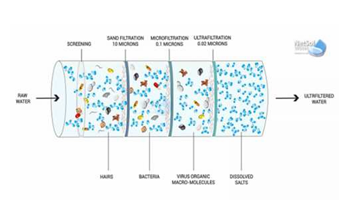
The solution’s backbone is cutting-edge, advanced filtration. CERAFILTEC, headquartered in Germany, is a global leader in ceramic ultrafiltration membrane technology. With a focus on transforming water and wastewater treatment, CERAFILTEC’s innovations enhance water quality, increase plant capacity, and reduce operating costs—all key factors in building sustainable and resilient infrastructure. Their ceramic membranes offer exceptional robustness and reliability, enabling consistent plant operation with reduced maintenance demands, new process possibilities, and ultimately a superior total cost of ownership. Resistant to chemicals, oil, and abrasive constituents, these membranes can handle harsh feedwaters that would otherwise shorten the lifespan of polymeric alternatives. This inherent durability provides plant owners and operators with a critical ‘insurance policy’ for long-term system reliability and performance.
Dr. Juergen Hambrecht, Chairman of CERAFILTEC and former CEO and Chairman of BASF, emphasized: “Our collaboration with xAI showcases the transformative potential of ceramic membranes in water and wastewater treatment, offering unparalleled reliability and efficiency. This project establishes a new industry benchmark and reinforces CERAFILTEC’s role as a global leader in innovative water solutions.”
Dr. Ernst Lutz, CERAFILTEC’s newly appointed Chief Technology Officer, formerly CTO at Sulzer and Grundfos, added: “It is great to see advanced water and wastewater treatment technology now having a true impact not just in the municipal sector but also in high-tech and high-growth industries like data centers, semiconductors, battery recycling, and many more. The opportunities for sustainable innovation are enormous.”
With the company’s mission, CLEAN WATER. EVERYWHERE., is its commitment to a future where access to high-quality water supports industrial innovation and environmental stewardship alike.
Why xAI Chose CERAFILTEC’s Ceramic Membrane Technology
Data center cooling demands robust and reliable water treatment systems that consistently deliver high-quality water. xAI’s in-house water resource engineer, who brought extensive experience with traditional polymeric membranes, played a key role in supporting the project. His evaluations and input helped confirm that CERAFILTEC’s ceramic membranes were the most suitable and forward-looking solution for the unique demands of xAI’s Colossus project.
Unlike polymeric membranes, which can suffer from frequent fiber breakages, short lifespans, and vulnerability to harsh cleaning processes, ceramic membranes can handle aggressive cleaning (if and when needed) and withstand harsh operational disruptions such as unexpected oil spills or upstream equipment failures. CERAFILTEC’s ceramic membranes offer unmatched reliability and robustness, essential qualities for mission-critical operations like cooling a high-performance computing (HPC) facility.
xAI is an innovation-driven company that actively embraces new technologies and sets benchmarks for emerging standards. Its commitment to pushing boundaries made CERAFILTEC a perfect match for this prestigious milestone project, which will become the world’s largest ceramic MBR in operation when commissioned at the end of 2025. Driven by a shared focus on resilience and sustainability, this alignment in vision naturally led to the adoption of cutting-edge solutions like CERAFILTEC’s ceramic membrane technology, setting the foundation for a critical infrastructure element in the Colossus project.
Ceramic Membranes: The Technology Transition Is Underway
Ceramic membranes are displacing polymeric membranes in many critical applications. The tipping point is here. When CERAFILTEC was founded in 2016, ceramic membranes represented just 1 to 2 percent of the global microfiltration and ultrafiltration market. Today, that figure has climbed to around 10 percent, with continued acceleration underway.
This kind of shift is not unusual. Technological transitions often begin with scepticism and slow adoption before accelerating rapidly once performance and economic advantages become clear. Such transitions unfold across all technology categories, e.g., from typewriters to personal computers, from analog to digital broadcasting, and from incandescent bulbs to LEDs.
The LED transition provides a compelling parallel. LEDs began as a costly and niche solution, but as performance improved and costs dropped, they quickly became the lighting standard. Their benefits were not just technical; LEDs offered dramatically longer service life, lower operating costs, and significantly reduced energy consumption. Crucially, they also came with clear sustainability advantages, using fewer toxic materials and creating less waste than their incandescent and fluorescent predecessors. Today, LEDs account for more than 90 percent of the lighting market. Ceramic membranes are on a similar path. Once seen as a specialized option, they are now becoming mainstream, and in many projects, the preferred solution in filtration thanks to their durability, lower total cost of ownership, and environmental benefits.
Beyond operational benefits, ceramic membranes also offer a superior sustainability profile: they generate no plastic waste, are fully reusable, and contain no PFAS-linked PVDF materials that raise growing environmental and health concerns.
As costs continue to drop and performance continues to improve, ceramic membranes are cementing their place as the go-to standard in modern filtration. The question is no longer whether they will gain widespread adoption; they already have.
The focus now is on how quickly they will become the default choice across applications. With steady advances in product developments, manufacturing and materials, this shift is set to accelerate, driven by their proven advantages in sustainability, reliability, and long-term cost efficiency over polymeric membranes.
The Crucial Intersection of AI Innovation and Sustainable Water Management
As AI drives advancements across critical industries: such as pharmaceuticals, healthcare, robotics, manufacturing, and beyond, the importance of sustainable supporting infrastructure, particularly data centers, becomes clearer. However, this rapid innovation should not occur at the expense of vital environmental resources. The challenge is not simply expanding capabilities but doing so sustainably, responsibly, and thoughtfully.
Projects like xAI’s Colossus clearly show that innovation in AI and water management are not only compatible but a powerful match. Through proactive strategies that incorporate reclaimed water usage, advanced ceramic membrane filtration, and an ecosystem-wide perspective, data centers can significantly reduce their environmental impact. CERAFILTEC’s technology is central to this shift, providing a scalable, proven solution for long-term sustainable water management.
The Path Ahead: Accelerating Adoption of Transformative Technologies
The path ahead demands embracing transformative technologies both in AI development and water treatment. CERAFILTEC and xAI set a valuable precedent demonstrating how leading-edge ceramic membrane technology combined with strategic thinking can effectively address the complex water-energy nexus faced by rapidly expanding data centers.
Sustainable innovation requires continuous advancement. Ceramic membranes will undoubtedly see further improvements in performance and affordability, accelerating their dominance over polymeric alternatives. These ongoing enhancements will benefit both the environment and operational economics, reinforcing the shift toward ceramic membranes.
The world must not only observe this shift, it must actively accelerate it, understanding that our sustainable future hinges on the intelligent management of our most vital resources. AI innovation and sustainable water filtration must advance hand in hand, driven by holistic solutions like those exemplified by xAI’s Colossus project. Embracing this integrated approach ensures a sustainable path forward, benefiting industries, communities, and the planet for generations to come.