
NMC To Recycle Treated Wastewater From New Gangapur STP For Civic Facilities

Gangapur-STP

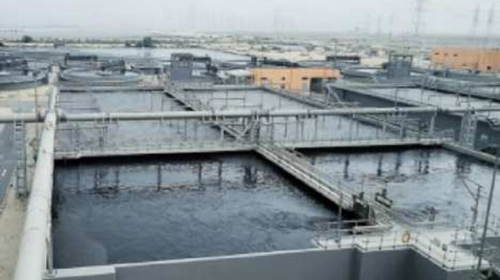
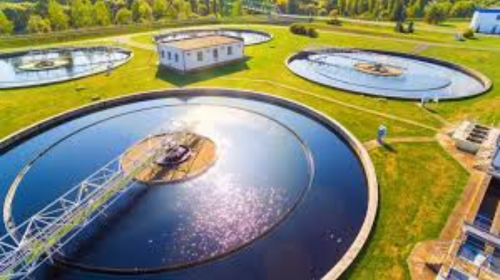
Nashik: In a first, the civic body plans to recycle treated wastewater from its new sewage treatment plant (STP) in Gangapur on the outskirts of the city, and use this water for various municipal facilities and works. The new STP was constructed two years ago under the govt. scheme AMRUT (Atal Mission for Rejuvenation and Urban Transformation). Now, treated water from the plant will be reused for city gardens, tree plantations, traffic islands, industries that need water for processing, and construction activities. The Nashik Municipal Corporation (NMC) has already received…

Read More

India, Nepal To Sign MOU To Strengthen Cooperation In Drinking Water, Sanitation And Hygiene

India-Nepal-To-Sign-MOU

India and Nepal are set to sign a MoU aimed at strengthening cooperation in drinking water, sanitation and hygiene sectors on Monday, in Delhi. Nepal’s Minister for Water Supply, Pradeep Yadav, reached Delhi on Saturday to participate in the signing ceremony. Joint Secretary of Nepal’s Water Supply Ministry, Meena Shrestha, confirmed this development to ANI and said the aim of the agreement is to develop the water resources, access to clean water, promotion of water sanitation, waste management “The aim of the agreement is to develop the water resources, access…

Read More

Tripura Scientists To Deploy Indigenous Water Purification Tech At BSF Outposts

Tripura-Scientists

Tripura scientists are rolling out an indigenous water purification system at BSF outposts to ensure safe drinking water for troops. The initiative promises to enhance living conditions by using cost effective and eco-friendly methods. A number of Border Security Force (BSF) outposts which are located in remote areas along the India-Bangladesh border have long struggled with severe drinking water shortages due to the difficult terrain and lack of accessible water sources.The problem worsens during the monsoon season when heavy rains render the already rugged roads impassable, cutting off vital water…

Read More

Treated Water From Apartments To Fill 30 Lakes In Bengaluru

Lakes-In-Bengaluru

Buoyed by the success of filling up 14 parched lakes with tertiary treated water from its sewage treatment plants (STPs) to tide over the summer water crisis of 2024, BWSSB says it will now fill up over 30 lakes across the city by drawing treated water from nearby apartment complexes. The water authority’s plans come even as apartment complexes have been complaining that the ambitious plan announced last year to facilitate diversion of treated water to industries hasn’t made any headway. The utility, however, said it would lay dedicated pipelines…

Read More

Maha Kumbh Solid Waste Perfectly Managed, Ganga Clean As Tap Water—2 Scientists From India, Us Find

Maha-Kumbh

A preliminary study by Stanford University’s Richard Dasher and Institute for Competitiveness’ Amit Kapoor has found that the management of toilets, solid waste, and faecal sludge at the recently concluded Maha Kumbh was “99.9 percent perfectly managed” despite enormous challenges. The 45-day Maha Kumbh, held on the banks of the Ganga in Prayagraj, saw participation from over 65 crore people. Approximately 4,000 hectares of reclaimed land along the river was transformed into a temporary city. Kapoor, with a team of 10 researchers, assessed various aspects of water and sanitation management…

Read More

Restoring The Divine Glory Of River Ganga: Namami Gange Programme Achieves Significant Milestones

River-Ganga

The Namami Gange Programme, launched in 2014 by the Government of India, represents one of the most comprehensive initiatives to restore the Ganga River through pollution abatement, ecological restoration, capacity building, and community engagement. Against available resources of Rs.20,424.82 crore for 2014-2023, the National Mission for Clean Ganga (NMCG) has disbursed Rs.16,648.49 crore, about 82% of budgetary provisions. The programme’s Rs.42,500 crore financial outlay serves as a sanctioning space rather than an immediate expenditure target, covering current spending and future commitments over a 17-year infrastructure lifecycle. The Hybrid Annuity Model…

Read More

Saving Nagarahole: Water Tankers step in as Several Lakes Run Dry

Saving-Nagarahole

As temperatures rise, Nagarahole Tiger Reserve faces increasing water scarcity, with six of 18 lakes in the wildlife-rich Antharsanthe zone drying up. This zone, known for its tigers, elephants, black panthers, deer, pythons, and wild dogs, sits adjacent to the Kabini backwaters. The Forest Department has responded by deploying water tankers to replenish dry lakes, making multiple trips daily to provide relief to thirsty animals and prevent them from straying into human settlements. The department prioritizes refilling lakes near village outskirts, particularly along the HD Kote-Manandavadi Road, to reduce human-wildlife…

Read More

Crop Diversification to reuse: Haryana meets 85% Water Conservation Goals

Crop-Diversification

Haryana saved 5.8 billion cubic meters of water from March 2023 to February 2025, reaching 85% of its target according to HWRA. The state aims to save 6.9 BCM by March 2025 through wastewater reuse, efficient cultivation, crop diversification, micro-irrigation, and groundwater recharge. The initiative began after HWRA identified a deficit of 14.03 trillion liters between water availability (20.9 trillion) and demand (34.96 trillion) for 2020-2022. This is critical as 60% of the state falls in the ‘red’ category for groundwater exploitation. For 2025-26, Haryana plans 244 new water bodies…

Read More

Nature can play major role in Improving Resilience to Flooding and Coastal Erosion, updated research from Environment Agency Underlines

Flooding-And-Coastal-Erosion

The Environment Agency has released an updated Working with Natural Processes Evidence Directory, enhancing the original publication from 2017. This new edition incorporates findings from over 700 scientific studies and summarizes evidence for 17 natural flood management (NFM) measures focused on river, floodplain, woodland, runoff, and coastal management. NFM aims to protect and restore natural functions of ecosystems to mitigate flooding and coastal erosion, applicable in both urban and rural settings. Key findings highlight that catchment woodlands not only reduce flood risk but also provide benefits for soil health, biodiversity,…

Read More

Scottish Water Invests £485, 000 In West Dunbartonshire Solar Project

Scottish-Water

A Scottish Water drinking water tank which helps distribute clean water to residents across West Dunbartonshire is now significantly greener thanks to 548 solar panels which have been installed on top of it. The £485,000 scheme, based at a distribution service reservoir in Old Kilpatrick, will see almost half of the site’s energy needs met by renewable power. It is set to save 48 tonnes of carbon dioxide equivalent annually. The panels, which have been installed on top of the water tank, are expected to generate 0.26GWh of green energy…

Read More