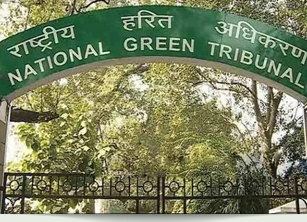

The Department of Drinking Water and Sanitation (DDWS), Ministry of Jal Shakti, has initiated the preparatory phase of Special Campaign 5.0 from 16th September 2025 to promote Swachhata and ensure effective disposal of pending references. The Campaign will be implemented across the Department from 2nd October to 31st October 2025, in line with the guidelines of the Department of Administrative Reforms and Public Grievances (DARPG). The objective is to institutionalize cleanliness practices and minimize pendency in Government offices. Building on the achievements of Special Campaign 4.0 held from 2nd October…
Read MoreCategory: News & Updates
Centre Mandates 65% Nregs Spending on Water Conservation Works in ‘over -exploited’, ‘critical’ Rural Blocks
The Centre has amended Schedule I of the Mahatma Gandhi National Rural Employment Guarantee Act (MNREGA), 2005, fixing a minimum percentage of funds to be spent on water conservation and harvesting works in rural blocks based on their stage of groundwater extraction. In rural blocks categorised as ‘over-exploited’ and ‘critical’ by the Central Ground Water Board (CGWB), a minimum of 65 per cent of the National Rural Employment Guarantee Scheme (NREGS) works in terms of cost shall be taken up for water conservation, water harvesting and other water-related works. ‘Over-exploited’…
Read MoreINDIA’S FORTUNE IS RIVERS, AND THROUGH THEM, CULTURAL ESSENCE REMAINS INTACT: SMT. MALINI AWASTHI
The 6th Nadi Utsav, organised by the Indira Gandhi National Centre for the Arts (IGNCA) under the Ministry of Culture, Government of India, concluded today at IGNCA, Janpath, New Delhi. Over three days, the festival celebrated rivers as ecological lifelines and cultural reservoirs, blending scholarship, art, and performance. The festival was inaugurated by Union Minister of Jal Shakti, Shri C.R. Patil. The valedictory session was graced by Shri Gopal Arya, Central Once Secretary of the RSS, as Chief Guest, chaired by Prof. K. Anil Kumar and moderated by Shri Abhay…
Read MoreGvmc Launches Three New Sewage Treatment Plants to Boost Visakhapatnam’s Wastewater Management
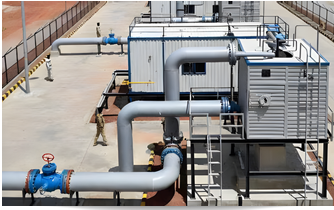
The Greater Visakhapatnam Municipal Corporation (GVMC) is set to strengthen the city’s sewage management infrastructure by constructing three new sewage treatment plants (STPs) at Appughar, Sagar Nagar, and Bheemili. This initiative is aimed at addressing rising sewage volumes and reducing untreated euent discharged into the Bay of Bengal. Currently, Visakhapatnam generates around 225 million litres per day (MLD) of sewage. Of this, approximately 171 MLD undergoes treatment, while the remaining 54 MLD flows untreated into the ocean. The planned STPs are expected to add a combined treatment capacity of 38…
Read More“Mizuiku” – Inspiring Local Action Through Water Education – a World Water Week Reflection
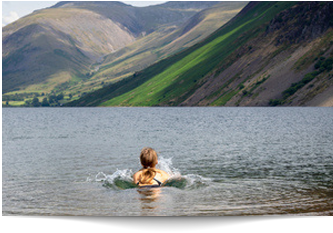
As UK rivers reach exceptionally low levels during heatwaves and drought warnings, water security risks impact households, farmers and businesses, highlighting the importance of local water stewardship and community engagement. Suntory Beverage & Food GB&I has committed to water conservation through its “Achieving Water Security” environmental principle, hosting “Mizuiku water engagement programmed” workshops over three years to educate the public about water security and the critical link between rivers and nature. Mizuiku, meaning water education in Japanese, was launched by Suntory Holdings in 2004 to teach younger generations about water…
Read MoreVa Tech Wabag Secures Rs 118-cr Repeat Order for Sewage Treatment Plant in Bahrain
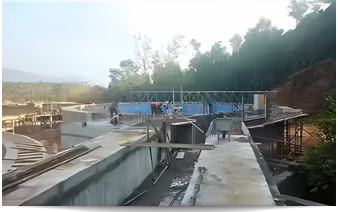
VA Tech Wabag (WABAG) announced that it has bagged a repeat order worth approximately 5.12 million Bahraini Dinars (around Rs 118 crore) from the Ministry of Works, Municipalities Aairs and Urban Planning (MoW) in the Kingdom of Bahrain. The order includes the operation and maintenance (O&M) of the 40 million litres per day (MLD) Madinat Salman sewage treatment plant (STP) and the Long Sea Outfall for a period of five years. WABAG was previously awarded the Engineering, Procurement, and Construction (EPC) contract for the same 40 MLD STP and Long…
Read MoreAccording to the Un, 2.1 Billion People Worldwide Lack Access to Clean Drinking Water
A whopping 2.1 billion people or one in every four people globally lack access to safely managed drinking water, according to a joint report by UN agencies WHO and the UNICEF on Tuesday. This includes 106 million people who drink directly from untreated surface sources, stated the report, released as part of the World Water Week 2025. Despite progress over the last decade, billions of people around the world still lack access to essential water, sanitation, and hygiene services, putting them at risk of disease and deeper social exclusion. The…
Read MoreNew Study Shows Warm Temperatures and Specific Water Levels Are Needed to Restore European Peatlands
European peatlands, which contain around half of Europe’s soil carbon, need a combination of warm temperatures and a water table of around 10 cm to thrive, a new study by Queen’s University Belfast researchers has found. Peatlands form where there is a sustained build-up of partially decomposed plant matter, and they play a very important role in locking away greenhouse gases and absorbing industrial pollution. In Europe, peatlands contain approximately five times more carbon than its forests. However, they have been damaged by human activities including pollution, draining and climate…
Read MoreSix Areas of Scotland Now at Significant Scarcity as Rivers Remain Low
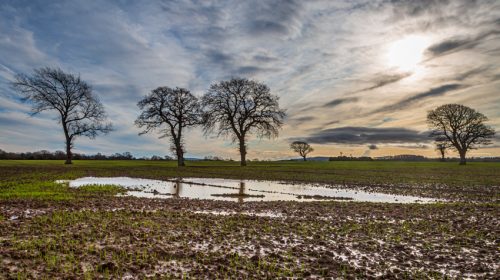
The Scottish Environment Protection Agency has confirmed that six areas of Scotland are now at Significant Scarcity, the highest level, as prolonged dry conditions continue across the east. The Upper Don and Lower Don reached Significant Scarcity on Wednesday 27 August, with the Lower Tweed catchment being escalated on Thursday 28 August. The North Fife, Ythan and Deveron catchments were announced earlier this week. Temporary restrictions have been issued on some abstraction licences in these areas, limiting the amount of water that can be taken from the environment. A report…
Read MoreSafeguarding Water Quality: The Technologies Protecting Our Freshwater Future
As global demand for freshwater intensifies, the conversation must evolve beyond quantity to address an equally urgent crisis: water quality. The Global Commission on economics of water forecasts that over half the world’s food production could be jeopardized by freshwater shortages within 25 years. But contamination of existing freshwater may prove just as perilous. Freshwater ecosystems face unprecedented stress. The UK’s Environment Agency reported 3.6 million hours of raw sewage discharge into rivers in 2024 alone. Poor water quality diminishes resource usability and accelerates ecosystem decline, imperiling biodiversity, public health,…
Read More