
In a global context where microplastic pollution has become one of the main threats to ecosystems, particularly marine ecosystems, the water industry—and, more specifically, the plastics sector responsible for manufacturing pipes and fittings for water networks— plays a decisive role in prevention at source. Molecor, a Spanish company specialising in solutions for water infrastructure, has made this challenge a central part of its sustainability strategy
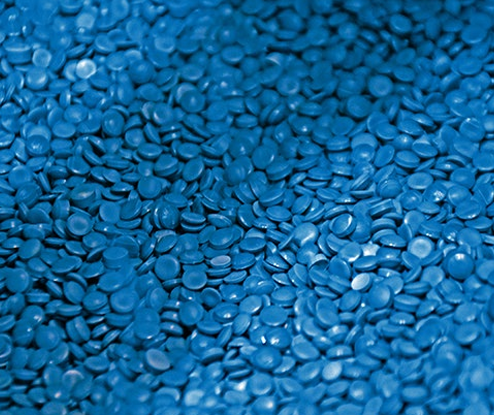
As a member of the plastics industry, Molecor takes its responsibility seriously when it comes to the proper management of materials throughout the entire production cycle and is firmly committed to preventing the release of microplastics into the environment. From the receipt of raw materials and their handling during the manufacture and transport of its products, the company works to prevent plastic particles from entering the environment.
Thanks to this commitment, in 2025 the company managed to reduce the microplastic waste it generates by 10.3%, whilst significantly strengthening its systems for monitoring and preventing potential environmental leakage. “Achieving the Zero Pellet Loss target is only possible when the commitment is integrated into day-to-day management and involves all operational staff; that’s our slogan ‘We are all OCS’,” says Yolanda Martínez del Amo, Director of Environment and CSR at Molecor. This approach is supported by the implementation of preventive and mitigation measures throughout the entire production process, alongside a model of continuous improvement aimed at maximising efficiency and minimising any potential leakage into the environment.” To this end, Molecor has introduced tools that improve traceability and enable a swift and effective response to any potential incidents.
One of the fundamental pillars of this strategy is its voluntary participation in the international Operation Clean Sweep (OCS) programme, an initiative aimed at achieving the goal of ‘zero loss of granules’. Molecor has certified all its plants in Spain in accordance with the OCS Europe scheme and continues to make progress in extending this standard to all its facilities worldwide.
Within this framework, Molecor demonstrates that environmental sustainability cannot be understood solely as proper waste management at the end of the process, but as the application of circular economy principles throughout the entire value chain. This approach involves acting from the selection of raw materials right through to the development of end products, integrating circularity at every stage. In this regard, the company’s production processes are esentially circular, enabling the reuse of 98.5% of the PVC waste generated during manufacturing for the production of new pipes and fittings.
Moreover, Molecor’s commitment to sustainability is not limited to its processes alone; it is also reflected in the development of innovative solutions. In this regard, its TOM® and ecoFITTOM® solutions stand out: these are oriented PVC (PVC-O) pipes and fittings developed using the company’s proprietary Molecular Orientation technology and eco-designed to reduce their environmental impact. These solutions not only improve the hydraulic performance and durability of water networks, but also help reduce material consumption and the CO2 emissions associated with their manufacture and use, thus helping to combat climate change.
In this way, Molecor positions itself as a key player in the fight against microplastic pollution, demonstrating that it is possible to move towards a cleaner, more conscious industrial model committed to the long term preservation of ecosystems.
expertise. Nevertheless, continuous technological additives such as government subsidies, financial incentives, and collaborative public-private partnerships can play a crucial role in making advanced smart irrigation technology more accessible and affordable, especially for smallholder farmers, thereby accelerating its broader implementation.