
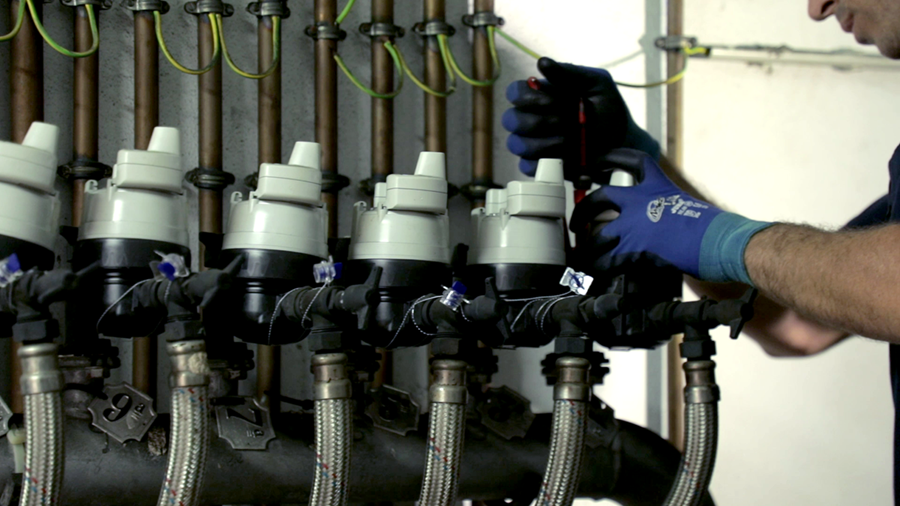
Smart water meters are becoming strategic assets, highlighting the value of data as a tool for better decision-making, smoother operations and more efficient management of water resources
June 22, 2026. In May, Brussels launched a public consultation inviting various water sector stakeholders to work together to promote digital transformation in the industry at different levels, focusing on key aspects such as the roll-out of smart meters and sensors to improve water management across the EU.
Digital transformation is rapidly moving from aspiration to reality. Last year, the European Investment Bank announced a program to invest €15 billion between 2025 and 2027 in water-related projects. The European Union has designated water as a strategic infrastructure category and has included it as one of the five priorities for a €34.6 billion reallocation of cohesion policy funds. Some €3.1 billion have already been reallocated to water resilience in 16 Member States. Meanwhile, the Spanish government estimates that the investment generated by the PERTE in Spain now exceeds €1.2 billion.
TRANSFORMING DATA INTO VALUE FOR DECISION-MAKING
For decades, water supply networks have been managed by reacting to events as they happened. Today, digital transformation and advanced data analysis provide access to sufficient information to understand and interpret consumption patterns, water demand behavior, and changes in performance indicators. In this regard, “utilities are already moving toward a fundamental principle: you can’t manage what you can’t measure. Smart metering represents not only a new generation of devices; it is the ultimate example of the strategic value of data and digital transformation,” noted Humberto Morales, Head of the Drinking Water Supply Division at Xylem Vue.
According to the expert, “water meters have long ceased to be merely a billing tool. Today, they play a strategic role in day-to-day management, providing real-time visibility, supporting predictive demand forecasting, and enabling the early detection of anomalies.”
The transition from four or six annual readings to 8,760 hourly readings per year undoubtedly represents a paradigm shift in water management. According to Xylem Vue, the availability of continuous, real-time information already enables anticipation and facilitates the move towards a more proactive, efficient model that is better prepared to respond to the new challenges facing the water sector. These new challenges “are not only technological, but also organizational and generational,” said Jaime Barba, CEO of Idrica and General Manager of Xylem Vue.
WATER NETWORKS: KEY SOURCES OF INFORMATION
Advancing digital transformation, which is one of the goals set by Brussels, will enable utilities to listen to what their water networks are telling them. Traditionally, water supply networks have been used to transport water from various production points to the end user. Today, these systems no longer just distribute water; they also carry something extremely valuable: information.
Every smart meter or pressure sensor installed in the network helps build a much more comprehensive view of the system. Networks are no longer merely physical infrastructure; they are also sources of knowledge. This knowledge is essential for managing a vital resource that is becoming increasingly subject to climate uncertainty, regulatory pressure, and the growing impact of aging infrastructure.
This year is key to advancing this profoundly transformative process. The Brussels initiative has already placed the focus where it truly belongs: on the value of data. Organizations capable of incorporating it as a strategic asset will not only be better prepared to navigate an increasingly complex and uncertain environment; they will also be better positioned to make better decisions. In this context, Humberto Morales, Head of the Drinking Water Supply Division at Xylem Vue, stated, “those that will make the difference will not only be those with more information, but those capable of turning that information into better decisions and more effective operations.”