

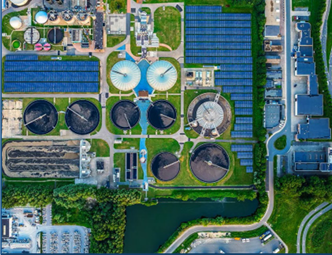
Europe has rewritten its environmental law by requiring pharmaceutical and cosmetics companies to pay for removing invisible chemicals from wastewater. The revised Urban Wastewater Treatment Directive, in force since January 2025, extends mandatory sewage treatment to smaller towns, mandates nutrient removal, sets energy-neutrality targets for 2045, and introduces quaternary treatment to remove micropollutants.
Quaternary treatment is a performance standard requiring 80% removal of indicator micropollutants. Three technologies compete: ozonation at moderate cost, activated carbon operationally simpler, and membranes capturing almost everything but expensive. Rollout is staged: 20% of large plants by 2033, 60% by 2039, 100% by 2045. Industrial capacity will be the bottleneck.
Plants must reach energy neutrality by 2045, generating power from biogas, waste heat and solar. The directive mandates methane measurement and introduces wastewater-based epidemiology monitoring.
Through Extended Producer Responsibility, pharmaceutical and cosmetics manufacturers must cover 80% of quaternary treatment costs. The industry disputes this, arguing micropollutants come from broader sources, making the scheme disproportionate. Poland and Ireland have filed legal challenges, ensuring the substance reaches the CJEU. The European Parliament called for suspension in June 2026, but the Commission rejected it.
Cost estimates vary sharply: Commission’s €1.56 billion annually versus industry and national estimates of €3.6 to €24.5 billion. Europe’s 80% threshold will become a de facto global technical reference. Suppliers standardising first and utilities commissioning first will dominate a fifteen-to-twenty-year market for micropollutant removal and energy recovery.