
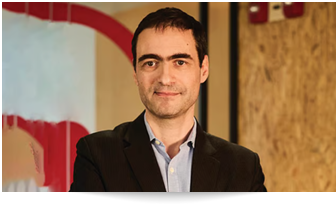
French water & wastewater management specialist Veolia will supply 60% of Mumbaikars’ drinking water requirements by 2030. Two water treatment facilities are coming up at Bhandup & Panjrapur in the city suburbs & are expected to be operational by 2029 & 2030, respectively. It will together supply nearly 3,000 million litres per day (MLD), catering to about 60% of the city’s drinking water demand, Guillaume Dourdin, CEO & country director of Veolia India, told Fortune India.
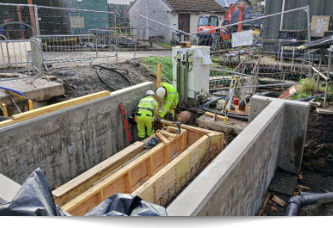
The Brihanmumbai Municipal Corporation (BMC) had awarded a Rs. 4,124 crore contract for the Bhandup plant, one of the largest in the world in terms of capacity, to Welspun Enterprises. Welspun chose Veolia as its technology partner to set up a 2,000 MLD Water Treatment Plant at BMC’s Bhandup Complex. The BMC also awarded Welspun a contract to design, build, & operate a 910 MLD water treatment plant at Panjrapur, located near Bhiwandi in the Thane district. “These new plants are designed to be more compact & energy efficient, reducing operating costs while accommodating land constraints typical of large Indian cities,” said Guillaume Dourdin.
Veolia, which reported €44.69 billion in global revenues in 2024, operates in about 54 countries with roughly 215,000 employees globally. Its flagship success in India remains Nagpur, where the company operates a citywide concession delivering round-the-clock drinking water to nearly 3.8 million residents. Industry estimates place India’s broader water ecosystem at roughly $14 billion today. Veolia aims to grow its India revenues by 50% by 2027 compared with 2025 levels, & to more than double its business by 2030.
The Nagpur project illustrates how operational discipline & digital integration can transform municipal systems. When Veolia began managing Nagpur’s network in 2012, non-revenue water stood at around 70%. That figure has since dropped to below 30%.
A transforming water market
“India is building capacity; regulations are in place, enforcement is strengthening & both municipalities & industries are realising that environmental management is not optional, it’s a license to operate,” said Dourdin. India’s water stress — driven by population growth, industrial expansion & climate variability — is accelerating interest in reuse & circular resource models. “Acceptance & consistent operations matter more. But reuse is inevitable — industries will increasingly depend on recycled water,” he said. Veolia is also exploring opportunities in sludge-to-energy conversion, where municipal wastewater by-products can generate biogas, compost or biochar.