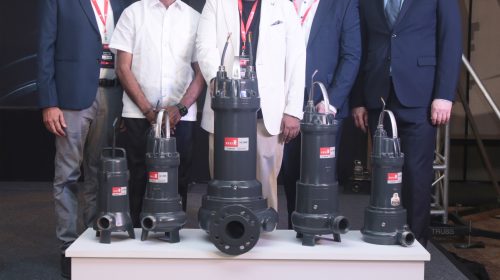

EKKI Water Technologies and Germany’s HOMA Pumpenfabrik GmbH, today announced a step forward in their Indo-German collaboration with the launch of the LINUS Clog-Defense Sewage Pump Range, and the next phase of expansion of EKKI HOMA, their joint venture focused on sewage pumping solutions for India and emerging markets. The LINUS Clog-Defense system is specifically engineered to eliminate and prevent clogging before it occurs, addressing one of the most critical challenges in sewage pumping systems. As part of its global growth strategy, the HOMA group has invested over USD 30…
Read MoreTag: Drinking Water
The Digital Transformation of Water Must Have the Right Technology, Strategy and Team to Organise It
With a firm commitment to advancing the protection of water resources, Seville (Spain) hosted WEX Global, the leading international forum in the water, energy, and climate change sectors, held from February 9 to 11, 2026. Under the theme “Water, Energy and Climate Change: From Vision to Action – Towards a Water-Abundant World,” the congress, celebrating its 20th edition, brought together more than 270 participants from over 45 countries. The program featured panel discussions, technical site visits, networking meetings, a gala dinner, and a showcase of the World Water Film Festival.…
Read MoreHigh Water Consumption in Hospitals: Evidence, Real Cases and Sustainability Challenges
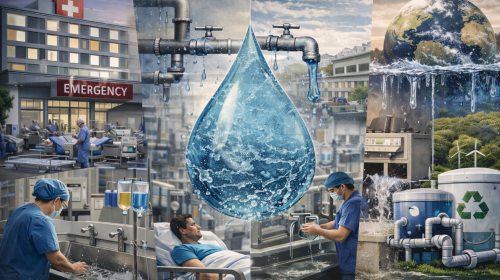
Hospitals are among the most water‑intensive buildings in any city. Unlike residential or commercial structures, healthcare facilities depend heavily on water for hygiene, patient care, medical procedures, sanitation, and cooling systems. This article explains why hospitals consume such large volumes of water, supported by real research studies and verified news reports. Why Do Hospitals Consume So Much Water? Water is essential to maintain strict hygiene and infection‑control standards in hospitals. It is used continuously for handwashing, cleaning wards, sterilizing surgical instruments, washing linens, operating kitchens, and flushing toilets. Large hospitals…
Read MoreTHE FUTURE OF WASTEWATER TREATMENT AND MANAGEMENT: EMERGING TECHNOLOGIES AND REAL-WORLD IMPACT (WITH AN INDIA PERSPECTIVE)
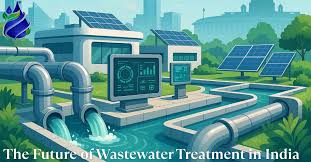
By Sharad Bhushan Executive Director, EWE, India, AECOM Wastewater management is undergoing a profound transformation evolving from a narrow “end-of-pipe” compliance exercise into a cornerstone of the circular economy. The sector is no longer about mere disposal but about value recovery: reclaiming water, nutrients, and energy while reducing emissions, protecting public health, and strengthening the resilience of urban and industrial systems. This article brings together the latest technological trends, practical innovations, and real-world applications including AECOM’s impactful work in India to present a holistic view of where wastewater innovation is…
Read MorePhosphate-Free Corrosion Inhibitor Protects Hydrotested Drinking Water Systems
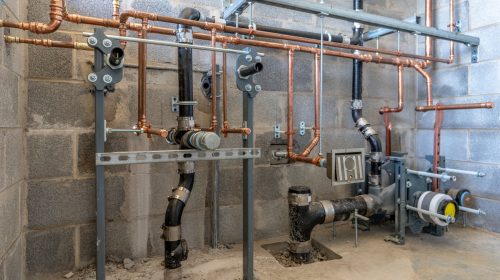
How often do you think about drinking water storage tanks and the plumbing behind your walls? Unless you’re a plumber or building contractor, these components probably don’t come to mind often. But out of sight does not mean out of mind for corrosion, which can compromise drinking water pipes and tanks before they are ever put into service. As a result, Cortec® is encouraging contractors and plumbers to spread the word about VpCI®-649 HP, a phosphate-free corrosion inhibitor for protection during and after hydrotesting. Hydrotesting of drinking water piping, fittings,…
Read MoreArtificial Rain: First Cloud Seeding Trial Conducted in Parts of Delhi
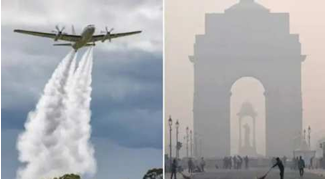
Delhi has conducted its first cloud-seeding trial, using aircraft to disperse silver iodide and sodium chloride over areas such as Burari and Karol Bagh. The initiative, led by the Delhi government in collaboration with IIT Kanpur, seeks to trigger artificial rainfall to wash out particulate pollution. This trial reflects a significant shift in Delhi’s environmental strategy; from reactive pollution control to proactive, technology-driven interventions. While cloud seeding has been used in other parts of the world, its application here underscores how water-industry thinking must increasingly overlap with meteorology and atmospheric…
Read MoreQuote from Mr Devansh Jain, Executive Director, INOXGFL Group
We thank the Government of India led by Hon’ble Prime Minister Shri Narendra Modi, and Hon’ble Finance Minister Shrimati Nirmala Sitharaman for presenting the Union Budget. The Union Budget 2026–27 underscores the Government of India’s sustained commitment to building a resilient, low-carbon energy system—an approach that closely aligns with INOXGFL Group’s integrated clean energy strategy across renewables, manufacturing and infrastructure. The continued policy support for battery energy storage systems, including customs duty exemptions for lithium-ion cell manufacturing, along with duty relief for key solar manufacturing inputs, will play a critical…
Read MoreKirloskar Brothers strengthens manufacturing capacity; renewables power 80% of new facility
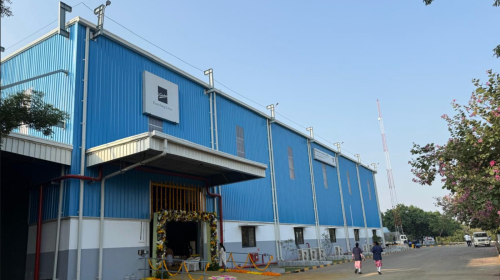
Kirloskar Brothers Limited (KBL), a leader in fluid management solutions, has inaugurated a new factory building at its Kaniyur Manufacturing Facility in Tamil Nadu. This expansion marks 100 years since KBL manufactured and installed India’s first centrifugal pump in 1926. The new facility is designed to enhance productivity and operational efficiency, enabling KBL to meet growing domestic and global demand while maintaining high quality standards. A significant highlight of the facility is its commitment to sustainability. Approximately 80% of its electricity requirements are met through renewable energy, reducing carbon emissions by 122.5 tCO₂e and…
Read MoreScarcity of Groundwater – an Emerging Concern for Future India
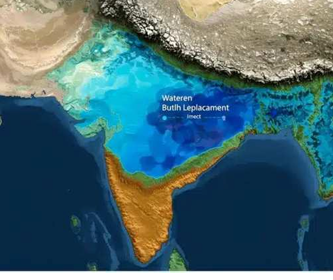
India’s groundwater crisis is intensifying, raising concerns about whether current reserves can meet increasing demand driven by climate change and rising temperatures. Groundwater is a major water source in India, used extensively for agriculture while supplying fresh water to billions and sustaining the nation’s food security. Groundwater sources are mostly recharged by rain, with 60 per cent from monsoon showers. With a warming climate, rain patterns have shifted or are missing in some cases. According to the Central Ground Water Board, total annual groundwater recharge fell from 449.08 BCM in…
Read MoreHaryana Govt to Bring New Law for Water Conservation: State Public Health Minister
During the closing ceremony of the two-day workshop organised by the public health engineering department at Panchkula, the minister said the objective of the proposed new law to promote water conservation and ensure an uninterrupted water supply to citizens. Haryana Public Health Engineering and Public Works Minister Ranbir Gangwa on Friday said the state government will bring a new law to prevent wastage of drinking water, address leakage issues, and promote water conservation. During the closing ceremony of the two-day workshop organised by the public health engineering department at Panchkula,…
Read More