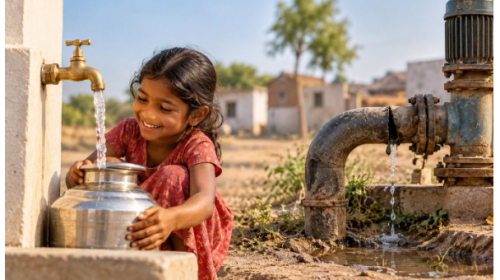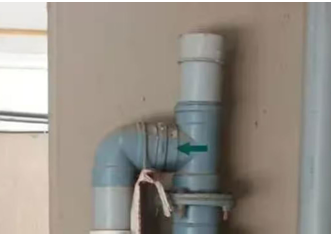

Why India’s rural water mission will be judged by what flows in year five, not the day of connection By Qazi Syed Wamiq Ali Every village that gets a tap tells a good story. A pipe is laid, a ceremony is held, and a household that once walked for water now turns a handle. Under the Jal Jeevan Mission, millions of rural households have been brought into this story in just a few years, and it is a genuine achievement. But the real test of a water scheme comes later,…
Read MoreCategory: News & Updates
India turns to satellite technology and mission-driven research to tackle water security
India’s Ministry of Jal Shakti, the government body responsible for water resources & the Indian Space Research Organisation (ISRO) have signed a memorandum of understanding to place satellite based observation, remote sensing and geospatial intelligence at the core of India’s water governance. Under the agreement, the two agencies will collaborate across 24 specific research areas where space-based tools offer particular value: reservoir monitoring, river-flow analysis, water-spread assessment, satellite-derived water quality measurement and flood forecasting. Village-level mapping through remote sensing is also expected to strengthen planning at the most local scale. …
Read MoreCanada tables First Nations Clean Water Act with $4.6 billion funding pledge
On June 16, 2026, Canada’s federal government introduced Bill C-37, the proposed First Nations Clean Water Act, marking the Carney government’s first legislative attempt on the issue and the third overall by the Liberal party, which had previously introduced similar bills in 2020 and 2023, neither of which became law. Tabled by Indigenous Services Minister Mandy Gull-Masty, the bill aims to close a long-standing regulatory gap: unlike other communities across Canada, First Nations have never had legally enforceable protections for safe drinking water. Alongside the legislation, the government announced a…
Read MoreFrom infrastructure to intelligent irrigation: a new approach to water management in Spain
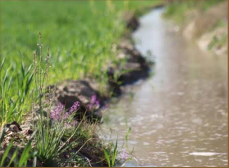
Spain’s irrigation sector has undergone significant transformation through investments in modern infrastructure, including pumping stations and pressurised distribution networks. However, infrastructure alone does not guarantee efficiency. A new challenge is emerging: ensuring water is applied in the right place, at the right time, and in the right quantity. Traditionally, irrigation decisions have relied on experience and established practices. While effective to a degree, this approach can lead to inefficiencies, particularly in a context of increasing water scarcity, rising energy costs, and growing environmental pressure. New technologies are enabling a shift…
Read MoreIDB approves $150 million programme to enhance water security and sanitation in Mendoza, Argentina
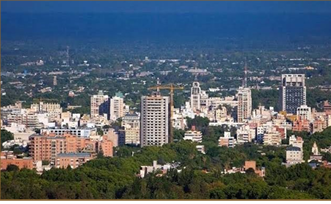
The Inter-American Development Bank (IDB) has approved a $150 million financing package to support improvements in water security, drinking water and sanitation services, and agricultural productivity in the Argentine province of Mendoza. The initiative is expected to benefit more than 1.6 million people through both direct and indirect impacts. The programme aims to increase the availability and quality of water resources by upgrading wastewater treatment infrastructure and reinforcing water resource management systems, which play a key role in Mendoza’s economy. “This operation will help strengthen the province’s water infrastructure, improve…
Read MoreEgypt and Coca-Cola explore renewable energy-powered water reuse project
A climate risk report by First Street finds that 54 percent of global data center capacity operates under heat or drought stress, with 79 percent exposed to elevated flood, wind, or wildfire risk. Despite massive capital flows ($61 billion in 2025 alone) and projections of $6.7 trillion investment through 2030, physical climate risk is systematically overlooked in site selection and asset valuation. The 18th First Street Risk Assessment evaluated 97 investible data center markets across chronic stressors (extreme heat, water scarcity) and acute hazards (flooding, wind, wildfire). Regional exposure varies…
Read MoreNASA advances wastewater recycling system for future Moon and Mars habitats
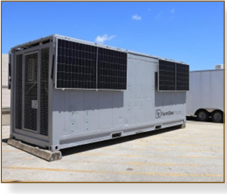
NASA has begun testing a mobile wastewater treatment facility designed to support long-term human habitation on the Moon and Mars. The system, developed at the Kennedy Space Center in Florida, has been transferred to the University of North Dakota, where it will be evaluated in a habitat that simulates the conditions of future extraterrestrial missions. The Divergent Deployable Wastewater Treatment Facility is intended to transform wastewater generated by crew members into reusable resources, helping reduce dependence on supplies transported from Earth. At the University of North Dakota, the technology has…
Read MoreHow to Secure Your Water Future as Concerns Escalate
The reliance of city residents on water tankers has increased alarmingly in recent years due to poor water supply infrastructure, unchecked concretisation and loss of green cover. With expanding civic boundaries and rapidly increasing population, the quantum of water supplied to cities has been falling short. Experts recommend that residential & commercial complexes invest in rainwater harvesting (RWH) systems. Lunkad Greenland-2 in Vimannagar was one of the first societies to install RWH in 2003. The society needed three tankers daily at Rs. 25,000 per month before installation. After spending Rs.…
Read MoreUNICEF report: floods, droughts and heat are putting over a billion children at risk
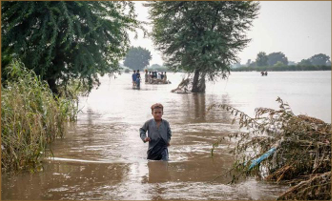
More than one billion children are now exposed to at least three simultaneous climate hazards, according to the Children’s Climate Risk Report 2026. Drawing on a newly developed Global Child Hazard Database, the report maps children’s exposure to eight climate hazards—riverine floods, droughts, tropical storms, heatwaves, extreme heat, fires and sand and dust storms—alongside malaria and ambient air pollution. Exposure is widespread: 1.8 billion children live in drought-affected areas, 1.5 billion face heatwaves, 1.2 billion experience temperatures exceeding 35°C, 662 million live in tropical storm zones, and 2.3 billion live…
Read MoreMore than half of data centers face drought or flood risk, report finds
The ten highest-risk markets include Northern Virginia, the Carolinas, Atlanta, Johor, Singapore, Batam, Marseille, Bangkok, Beijing, and New York/Northern Jersey. Lowest-risk markets cluster in northern Europe (Stockholm, London, Copenhagen, Amsterdam, Oslo, Dublin) plus Toronto, San Francisco, Montreal/Quebec & Bogota. The industry is concentrating capacity in demanding locations rather than favorable ones. 30–50 percent of 2026 projects face delay as established hubs hit power, land & permitting constraints. The central argument: climate risk is underpriced. Markets with comparable power costs and demand are underwritten as equivalent despite materially different risk profiles,…
Read More