
A Satellite Watching Over Haryana’s Farms Is Helping the State Save Rs 300 Crore Per Year
Haryana received the Geospatial Excellence Award at the Geospatial World Forum in Amsterdam in May 2026 for a satellite-powered system that helps farmers identify water stress before they see it. The international jury praised Haryana’s Space Applications Centre (HARSAC) for building a practical, scalable system that tackles food security, environmental sustainability, and climate resilience together.  At its heart, the platform brings together satellite imagery, remote sensing data, GIS dashboards, mobile apps, UAV surveys, and AI analytics in one operational layer. Through this, HARSAC provides crop monitoring and yield assessment, water…

Read More

Maharashtra to Shift Over 22,000 Rural Water Projects to Solar Energy

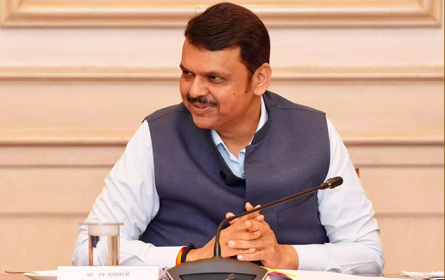
The Maharashtra government is developing a policy to solarise 22,185 rural water supply schemes as part of efforts to reduce mounting electricity dues and ensure uninterrupted drinking water services. Chief Minister Devendra Fadnavis has directed officials to formulate a dedicated policy for the phased solarisation of rural water infrastructure.  The move comes amid growing concerns over mounting electricity dues associated with water supply projects. Power-related liabilities have been increasing for several schemes, creating financial and operational challenges for local authorities. Chairing a review meeting on the state’s rural drinking water…

Read More

How This Chhattisgarh District is Using a ‘5% Model’ to Boost Groundwater

At a time when scorching heat and water scarcity trouble several parts of Chhattisgarh, a water conservation movement in Korea district is showing promising results. Known as the “5% model”, the initiative encourages villagers to dedicate 5% of their agricultural land for soak pits that help rainwater percolate into the ground, contributing to significant improvement in groundwater levels.  The model has drawn national attention. Prime Minister Narendra Modi highlighted it in his Mann Ki Baat programme in March, while Union Jal Shakti Minister C R Patil has suggested it could…

Read More

Madhya Pradesh’s Water Conservation Model Draws Global Recognition 

Madhya Pradesh’s Jal Ganga Samvardhan Abhiyan is gaining international attention as a successful water conservation model. Launched under Chief Minister Mohan Yadav, the campaign focuses on rejuvenation of rivers, ponds and traditional water bodies while promoting sustainable water management practices across the state.  The recently concluded seven-day “Sadanira Samagam” at Bharat Bhavan in Bhopal highlighted integration of water conservation efforts with India’s cultural heritage. The event was attended by diplomats from Cyprus, Fiji, Mexico, Nepal, Trinidad and Tobago, and Ecuador, who praised the Madhya Pradesh model as a meaningful response…

Read More

Maharashtra Cabinet Approves Rural Drinking Water Policy, Nagpur Medical Cyclotron Project

The Maharashtra Cabinet approved a series of major initiatives covering healthcare, drinking water, technology, digital connectivity and governance. The Cabinet gave its nod to the establishment of a High Energy Medical Cyclotron Project in Nagpur. The project, the first of its kind in Central India, is expected to strengthen the diagnosis of various diseases and improve the precision of medical treatment.  The Cabinet also approved the Maharashtra Rural Drinking Water Policy 2026 to address drinking water scarcity in rural areas. The policy aims to ensure the supply of clean, safe…

Read More

PLANT UPGRADES TO TYNDRUM TREATMENT WORKS TRIPLES FILTER SCREENING CAPACITY

Tyndrum Wastewater Treatment Works in Stirlingshire, Scotland, has upgraded its process screening capacity to handle more than triple its original volume, increasing capacity from 3.2 litres per second to 10.6 L/s. WGM Engineering delivered the full design plus civils, construction, MEICA fit-out and commissioning for Scottish Water, completing the project in July after extensive testing.  The 1981-built plant’s age and location within a tourist-dependent village created significant challenges. The plant had to remain operational throughout construction, requiring temporary screenings and over-ground pumping. “Installation faced unforeseen hurdles due to the age…

Read More

DAERA AWARDS THIRD COMPANY ÂŁ4MILLION TO ADVANCE SUSTAINABLE UTILISATION OF LIVESTOCK SLURRY

Natural World Products (NWP) has been awarded ÂŁ4million to help Northern Ireland’s agriculture sector reduce excess phosphorus from livestock slurry, as part of the further roll-out of the Lough Neagh Action Plan. The award has been presented as part of the Department of Agriculture, Environment & Rural Affairs’ (DAERA) Small Business Research Initiative (SBRI) Phase 2 project for the Sustainable Utilisation of Livestock Slurry (SULS).  The SULS project aims to undertake research & development into the advancement of demonstrator sites to process livestock manure/slurry to remove excess phosphorus from the…

Read More

INDO-GERMAN CONCLAVE PUSHES “INTEGRATED WATER RESOURCE MANAGEMENT”

The Indo-German Science & Technology Centre (IGSTC) held a high-level Strategic Conclave 2026 at Vigyan Bhawan on February 24. The event focused on “Integrated Water Resource Management” (IWRM) and brought together policymakers from both nations to discuss sustainable water governance. A key highlight was the “2+2 model,” which pairs German and Indian academic and industrial partners to develop scalable water technologies.  Discussions centered on the remediation of “emerging chemicals”—pollutants that are often missed by standard treatment processes—and the need for circular water economies. The German Ambassador, H.E. Dr. Philipp Ackermann,…

Read More

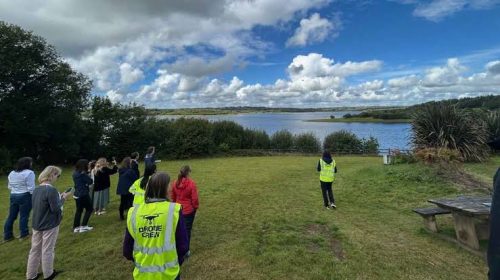
HOW SOUTH WEST WATER’S NEW PROJECT LOOKS TO TACKLE HARMFUL ALGAL BLOOMS & THE GROWING THREAT THEY POSE

Water

Lurking in our lakes, reservoirs & rivers is a growing threat that is beginning to surface harmful algal blooms (HABs). Naturally occurring, HABs form when algae grow rapidly in warm nutrient-rich waters.  Nutrients can come from the natural environment, the atmosphere and from slurries and fertilisers, such as nitrogen and phosphorus, which are applied to farmland. If this then runs off into waterways it provides these blooms with a feast to grow on.  Sometimes these blooms are harmless but many types of algae can turn toxic and grow which can…

Read More