
New early warning systems must be based on three key elements: the ability to simulate, predict, and analyze in real time; coordination between agencies and operators; and public education, risk awareness, and trust in the warning system, according to Xylem Vue
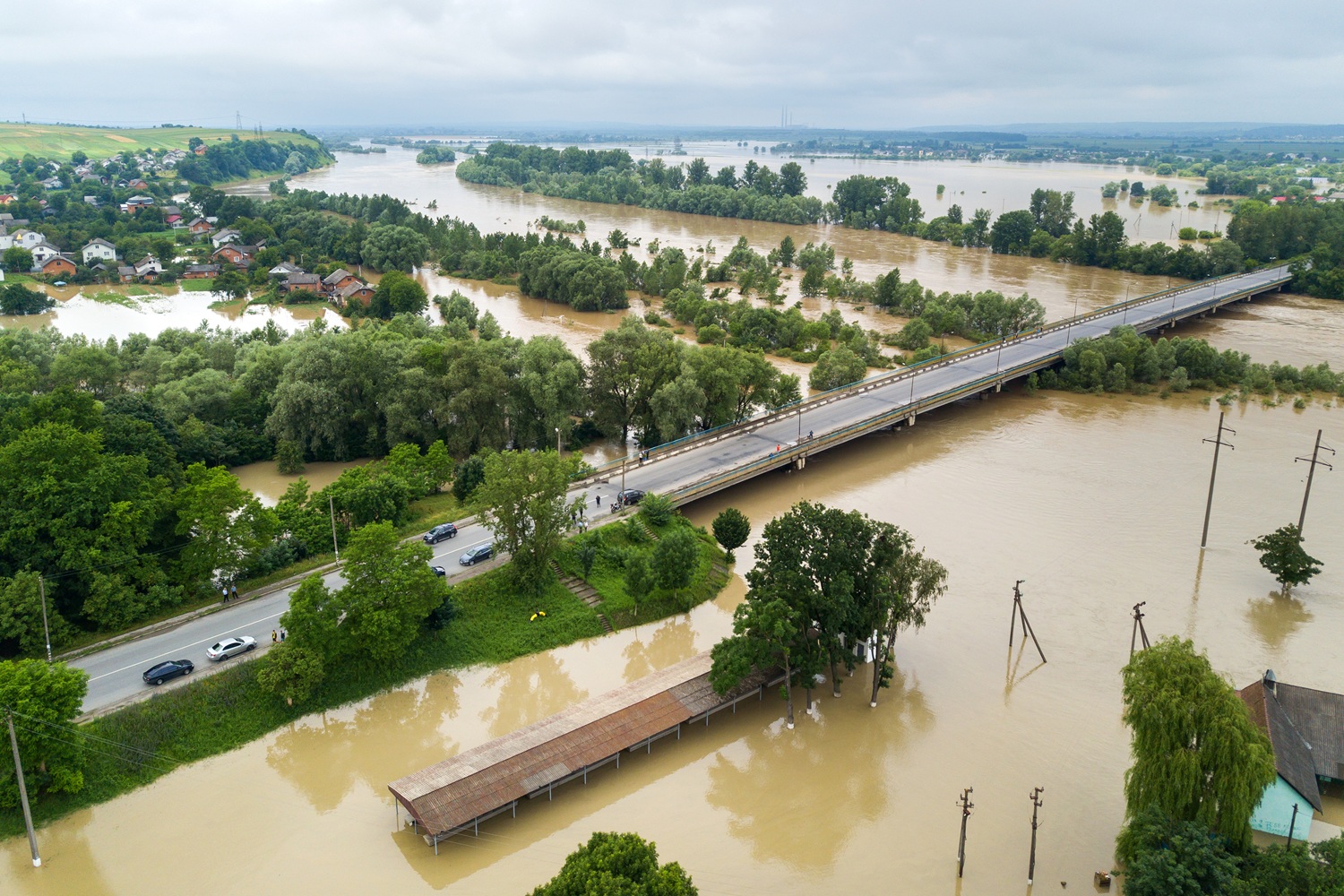
June 8, 2026. The real value of a warning system for extreme events such as floods lies not in the warning itself, but in the ability to trigger timely decisions well in advance, according to the World Meteorological Organization and UNEP.
According to Sergio Morant, Head of EWS at Xylem Vue, “The true challenge today with these types of weather phenomena lies in moving from warning to impact, from threshold to consequence, and from reaction to anticipation. This is the only way to ensure that hydrodynamic knowledge, simulation speed and frequency, along with institutional coordination, are ultimately put to their intended purpose: protecting people in an increasingly challenging climate context.”
The changes taking place in early warning systems (EWS) are strategic as well as technological. New EWS now focus on risk management, turning them into operational systems, according to the report Water Technology Trends 2026: a strategic guide to the future of smart water, released by Xylem Vue.
The difference between a water management monitoring system and an operational system can be measured in minutes, and those minutes can mean the difference between life and death in the case of extreme events such as major floods.
SIMULATION SPEED: ESSENTIAL IN EMERGENCY MANAGEMENT
This step change involves running hydrological and hydraulic models in real time, fed by multiple weather forecasts and constantly updated field data. Simulation speed thus becomes a strategic variable. In emergency management, an extremely accurate model requiring hours of computation may be less useful than a robust model capable of recalculating scenarios every few minutes.
High-frequency simulations that ingest real-time rainfall and flow data, automatically correcting parameters and adjusting hydrological responses through data-driven approaches, provide dynamic information that no static model can offer,” stated Sergio Morant, Head of EWS at Xylem Vue.
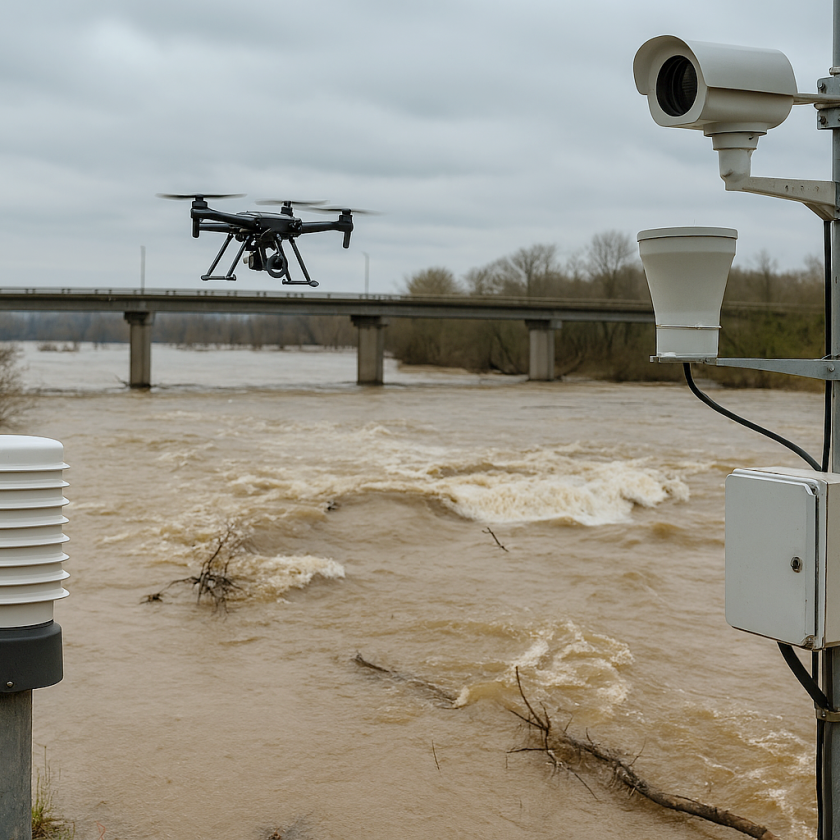
In severe convective storms, where spatial and temporal uncertainty is greatest, it is a conceptual error to rely on a single deterministic forecast. According to Morant, the key lies in the ability to analyze all available forecasts, bringing together different weather models, probabilistic scenarios, and alternative simulations to ensure no critical information is missed. This approach makes it easier to identify which scenarios are not only the most likely but also the ones expected to have the greatest impact, giving water managers a more comprehensive overview of the risks.
Early warning systems: three key elements
However, even the best model ceases to be useful if it is not embedded in a clear operational framework. According to Xylem Vue, an effective early warning system must be based on three key elements.
The first is technology and knowledge, i.e., the ability to simulate, predict, and analyze impacts with hydrodynamic accuracy using software tools and platforms.
The second is an institutional element: genuine coordination is required between water authorities, local governments, civil defense agencies, and infrastructure operators to ensure that information is turned into actionable decisions.
The third is a social element: education, a culture of risk awareness, and public trust in the warning system.
Without these three key components, technology alone does not save lives.
WORK BEHIND THE SCENES
There is also a less visible yet absolutely essential dimension: the behind-the-scenes work that sustains the system when it is not raining.
An early warning system must be calibrated, updated, validated, and coordinated throughout the year. Models must be reviewed, sensors verified, protocols tested, plans updated, and agencies constantly aligned.
The ultimate goal is not to generate more data or deploy more sensors. It is to buy time. Time to close a road before it floods; time to protect a pumping station; time to activate a municipal plan before floodwaters reach vulnerable areas; or time to ensure a family is not trapped in their home.
According to UN Secretary-General António Guterres, “Early warnings and action save lives.” He has also called on governments, financial institutions, and civil society to support their implementation.