

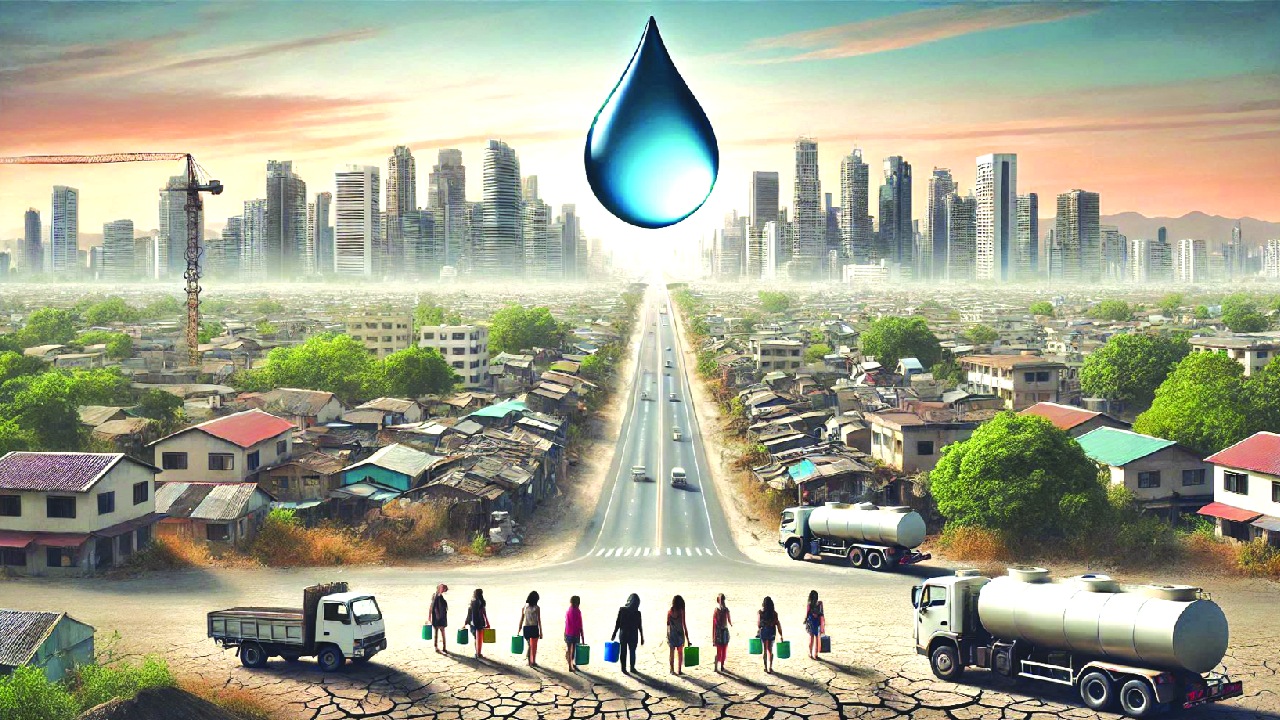
N Nearly 600 million Indians endure high to extreme water scarcity, & over 21 cities, including Delhi, Bengaluru & Chennai, could run out of groundwater by 2030. According to NITI Aayog’s 2019 report, India’s per capita water availability is around 1,100 cubic meters, significantly below the water stress threshold of 1,700 cubic meters. By 2030, India’s water demand is estimated to be twice the available supply, implying severe scarcity.
Smart Water Management: A Transformational Solution
A decisive pivot to Smart Water Management (SWM) can make a transformational difference. Leveraging IoT technologies to plan, develop, distribute, and manage water resources, SWM is an innovative approach to use water more wisely. The crucial issue requiring immediate action is Non Revenue Water. Indian urban water utilities lose nearly 40 percent of supplied water to NRW, significantly higher than the global average of 30 percent, amounting to $39 billion per year. The World Bank reported that India loses $2.5 billion annually due to NRW.
New-age technologies like AI, IoT, and smart systems such as SCADA and GIS can enhance smart water conservation. Smart water management powered by IoT and AI is expected to be a USD 53.85 billion market by 2032, with Asia-Pacific being one of the fastest-growing regions.
Technology Applications
Real-time monitoring via IoT smart sensors enables rapid detection of leaks, blockages, or contamination. AI-powered predictive analytics can predict future water demand and identify potential equipment failures by analyzing data from IoT sensors, weather forecasts, and historical usage patterns. IoT enabled smart water meters track consumption in real time, providing instant usage data to consumers and utilities.
Success Stories
Haryana’s AI-enabled Water Atlas integrates geospatial, satellite & IoT data for real-time monitoring. Bhopal’s water utility uses a SCADA-based control system for automated management. Nagpur Municipal Corporation reduced NRW from 40 percent to below 29 percent through AI, IoT & robotic interventions. Programs like AMRUT, Jal Jeevan Mission & Viksit Bharat 2047 are increasingly embedding digital platforms into city water supply systems.
The Path Forward
Advanced technologies give India an opportunity to reshape water governance. The future lies in seamlessly integrating AI and IoT with policy, community participation, and resilient infrastructure. The Government has laid strategic groundwork with schemes like AMRUT 2.0, prioritising the digital overhaul of urban water systems. As India advances towards Viksit Bharat, blending domain knowledge with digital mastery will ensure India’s cities are resilient and resourceful for the next generation.