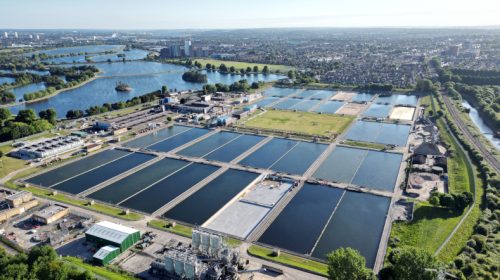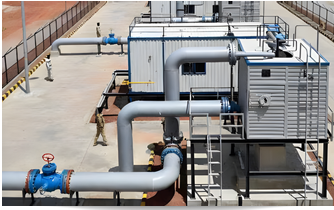

By Devendra Singh Fonia, Chief Marketing Ofcer,BPC India Retrotting Oil-Water Skimmers for Reliable Primary Treatment in Reneries The Challenge: Oil Shock Loads and Manual Skimmer Control In several leading Indian refineries, TPI/CPI separators are designed to isolate free-phase oil from primary effluent. However, due to manual skimmer operation, these systems often underperform when handling real-world variations, especially: This manual dependency made it difficult to maintain less than 50 ppm oil in effluent at the outlet of TPI and increases risk of downstream process disruption. BPC’s Automation: Modular Retrofit for Oil…
Read MoreTag: water management
The Future of Wellness: How Nico’s Nanobubble Technology is Transforming Hydrotherapy & Bio-oxygen Soaking
By Amit Kapur, Founder, Chairman & Managing Director, NICO Nanobubble India Co. A Silent Evolution in Water-Based Wellness where India’s wellness industry is entering a new era, one recovery, relaxation, and rejuvenation must be evidence-based, not merely experiential. As stress levels rise, lifestyles intensify, and the demand for natural therapeutic solutions grows, traditional hydrotherapy is no longer enough. The future of wellness lies in water that doesn’t just hold heat or minerals, but oxygen. NICO Nanobubble India Co. is pioneering this transformation through Bio-Oxygen Soaking, a breakthrough technology that infuses…
Read MoreEKKI HOMA Launches Clog-Defense Range for India’s Toughest Sewage Challenges
EKKI Water Technologies and Germany’s HOMA Pumpenfabrik GmbH, today announced a step forward in their Indo-German collaboration with the launch of the LINUS Clog-Defense Sewage Pump Range, and the next phase of expansion of EKKI HOMA, their joint venture focused on sewage pumping solutions for India and emerging markets. The LINUS Clog-Defense system is specifically engineered to eliminate and prevent clogging before it occurs, addressing one of the most critical challenges in sewage pumping systems. As part of its global growth strategy, the HOMA group has invested over USD 30…
Read MoreThe Digital Transformation of Water Must Have the Right Technology, Strategy and Team to Organise It
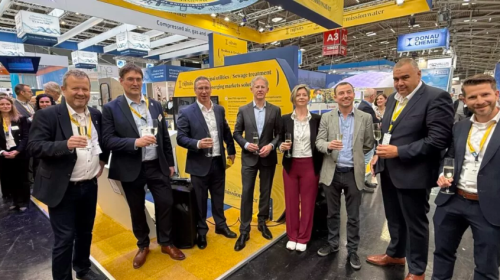
With a firm commitment to advancing the protection of water resources, Seville (Spain) hosted WEX Global, the leading international forum in the water, energy, and climate change sectors, held from February 9 to 11, 2026. Under the theme “Water, Energy and Climate Change: From Vision to Action – Towards a Water-Abundant World,” the congress, celebrating its 20th edition, brought together more than 270 participants from over 45 countries. The program featured panel discussions, technical site visits, networking meetings, a gala dinner, and a showcase of the World Water Film Festival.…
Read MoreTHE FUTURE OF AI RUNS ON -RECLAIMED- WATER
Have you ever paused to consider how deeply artificial intelligence (AI) influences our lives and the economy today, and more importantly, what its future holds? Right now, AI mainly boosts administrative productivity, but soon it will drive groundbreaking inventions, accelerate critical research, develop life-saving drugs, and enable revolutionary advances in robotics. Behind this promising digital frontier lies an often-overlooked challenge: water. Data centers, the critical infrastructure supporting AI, require immense volumes of water for cooling. How can we sustain the enormous potential of AI-driven innovation without exhausting our precious freshwater…
Read MoreHigh Water Consumption in Hospitals: Evidence, Real Cases and Sustainability Challenges
Hospitals are among the most water‑intensive buildings in any city. Unlike residential or commercial structures, healthcare facilities depend heavily on water for hygiene, patient care, medical procedures, sanitation, and cooling systems. This article explains why hospitals consume such large volumes of water, supported by real research studies and verified news reports. Why Do Hospitals Consume So Much Water? Water is essential to maintain strict hygiene and infection‑control standards in hospitals. It is used continuously for handwashing, cleaning wards, sterilizing surgical instruments, washing linens, operating kitchens, and flushing toilets. Large hospitals…
Read MoreTHE FUTURE OF WASTEWATER TREATMENT AND MANAGEMENT: EMERGING TECHNOLOGIES AND REAL-WORLD IMPACT (WITH AN INDIA PERSPECTIVE)
By Sharad Bhushan Executive Director, EWE, India, AECOM Wastewater management is undergoing a profound transformation evolving from a narrow “end-of-pipe” compliance exercise into a cornerstone of the circular economy. The sector is no longer about mere disposal but about value recovery: reclaiming water, nutrients, and energy while reducing emissions, protecting public health, and strengthening the resilience of urban and industrial systems. This article brings together the latest technological trends, practical innovations, and real-world applications including AECOM’s impactful work in India to present a holistic view of where wastewater innovation is…
Read MorePhosphate-Free Corrosion Inhibitor Protects Hydrotested Drinking Water Systems
How often do you think about drinking water storage tanks and the plumbing behind your walls? Unless you’re a plumber or building contractor, these components probably don’t come to mind often. But out of sight does not mean out of mind for corrosion, which can compromise drinking water pipes and tanks before they are ever put into service. As a result, Cortec® is encouraging contractors and plumbers to spread the word about VpCI®-649 HP, a phosphate-free corrosion inhibitor for protection during and after hydrotesting. Hydrotesting of drinking water piping, fittings,…
Read MoreArtificial Rain: First Cloud Seeding Trial Conducted in Parts of Delhi
Delhi has conducted its first cloud-seeding trial, using aircraft to disperse silver iodide and sodium chloride over areas such as Burari and Karol Bagh. The initiative, led by the Delhi government in collaboration with IIT Kanpur, seeks to trigger artificial rainfall to wash out particulate pollution. This trial reflects a significant shift in Delhi’s environmental strategy; from reactive pollution control to proactive, technology-driven interventions. While cloud seeding has been used in other parts of the world, its application here underscores how water-industry thinking must increasingly overlap with meteorology and atmospheric…
Read MoreThe River Crisis: Why Industry Must Begin to Lead Cleanup
India holds roughly 18% of the world’s population but only about 4% of its renewable freshwater resources, raising the stakes of river degradation. Across the country, untreated industrial wastewater contaminates rivers including the Yamuna, Ganga, Sabarmati and Jojari, with many tributaries critically degraded and facing functional collapse in coming decades. A major contributor is the textile and tannery industry, which consumes vast amounts of water and generates difficult-to-remove waste. Polluted rivers threaten drinking water, farm productivity, public health and local economies. Studies near Kanpur’s tanneries show chromium in groundwater far…
Read More