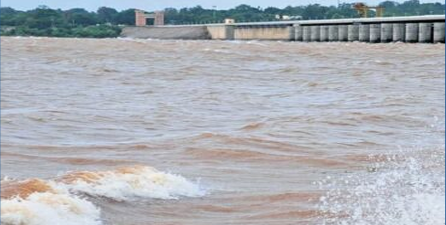

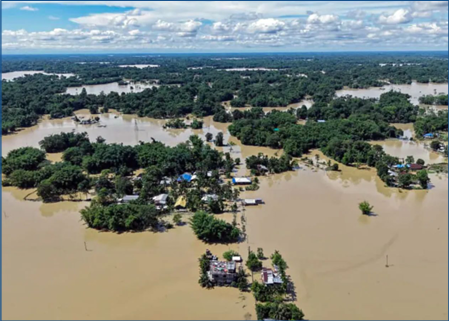
At least 66 lives have been lost in around a week, close to seven lakh people are affected and the government is yet to reach more than 50,000 people for relief. Assam is in the grip of an unprecedented wave of floods, with people in Upper Assam’s Sivasagar, Charaideo and Jorhat saying they have never experienced such flooding in their lifetimes.
The total population affected is estimated at seven lakh across 856 villages in 12 districts. Entire villages, vast expanses of agricultural land and major towns have been inundated with water well above chest level. The Assam State Disaster Management Authority has recorded 58 deaths including six children. More than 1.15 lakh people are in relief camps and around 4,455 have been evacuated by boats. The government is yet to reach around 30% of areas in Nazira and around 20% in Sivasagar constituency, as receding floodwaters have left layers of sediment several feet high, making access difficult.
The Assam government initially attributed the flooding to a “cloudburst” in Mon, Nagaland. However, a meteorologist stated the area experienced heavy rainfall of 137 mm over eight to nine hours rather than a true cloudburst (defined as exceeding 100 mm within one hour). Rainfall received on July 18 and 19 across three Nagaland districts and Charaideo in Assam was well above normal levels, with a 436% departure in Charaideo and 493% in Mokokchung. The speed at which water levels rose was “unprecedented”, with the already swollen Brahmaputra hindering drainage of tributaries into the river.
Excessive rainfall alone is not responsible for the devastation. Gauhati University professor Dhrubajyoti Sahariah noted a mix of rainfall and anthropogenic factors, including excessive excavation on river valley sides likely from mining, which reduces river carrying capacity. Retired IIT Roorkee professor Nayan Sharma cited deforestation as a critical contributing factor. Forest cover reduces flooding by increasing infiltration opportunity time, allowing water to percolate ground. Without forests, water moves rapidly downhill carrying excess silt, raising the river bed and further reducing carrying capacity. The release of excess water from the Doyang Hydroelectric Project in Wokha has also not helped floodwaters recede.